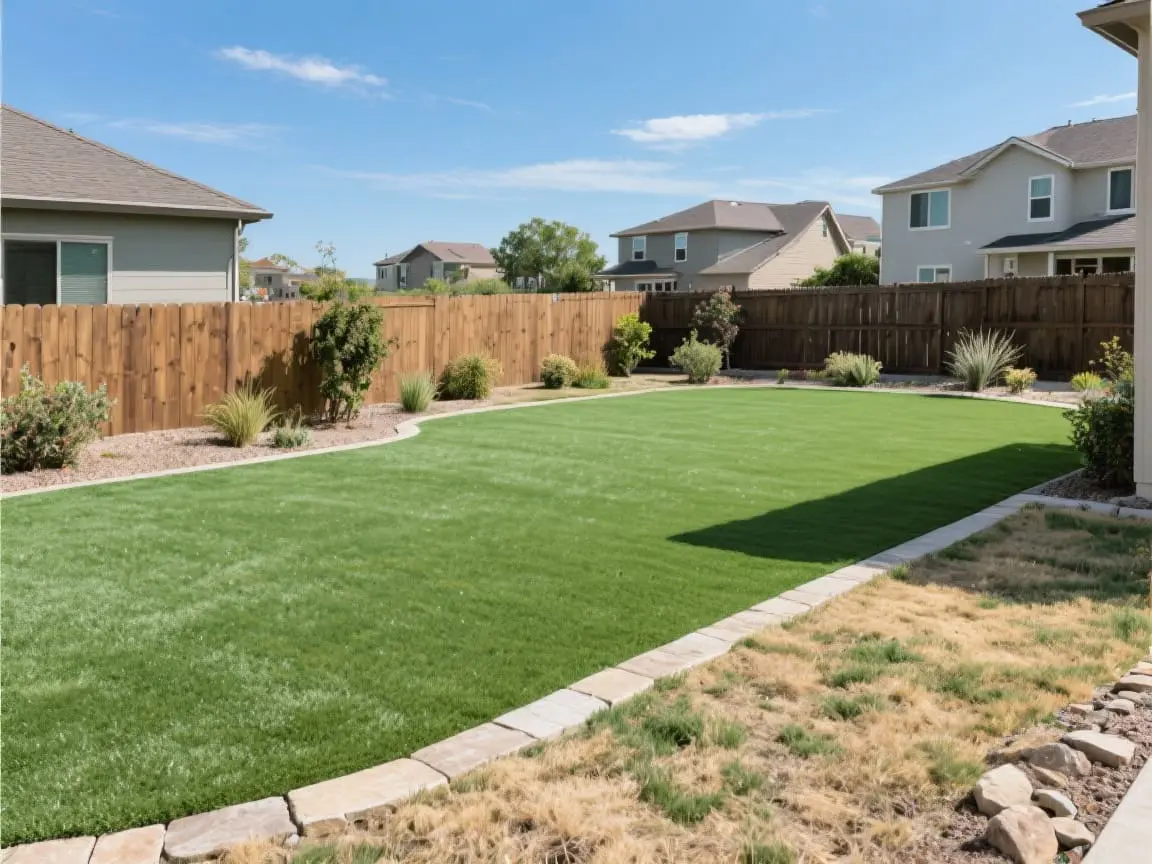
Can You Put Artificial Turf on a Slope to Stop Erosion in Texas?
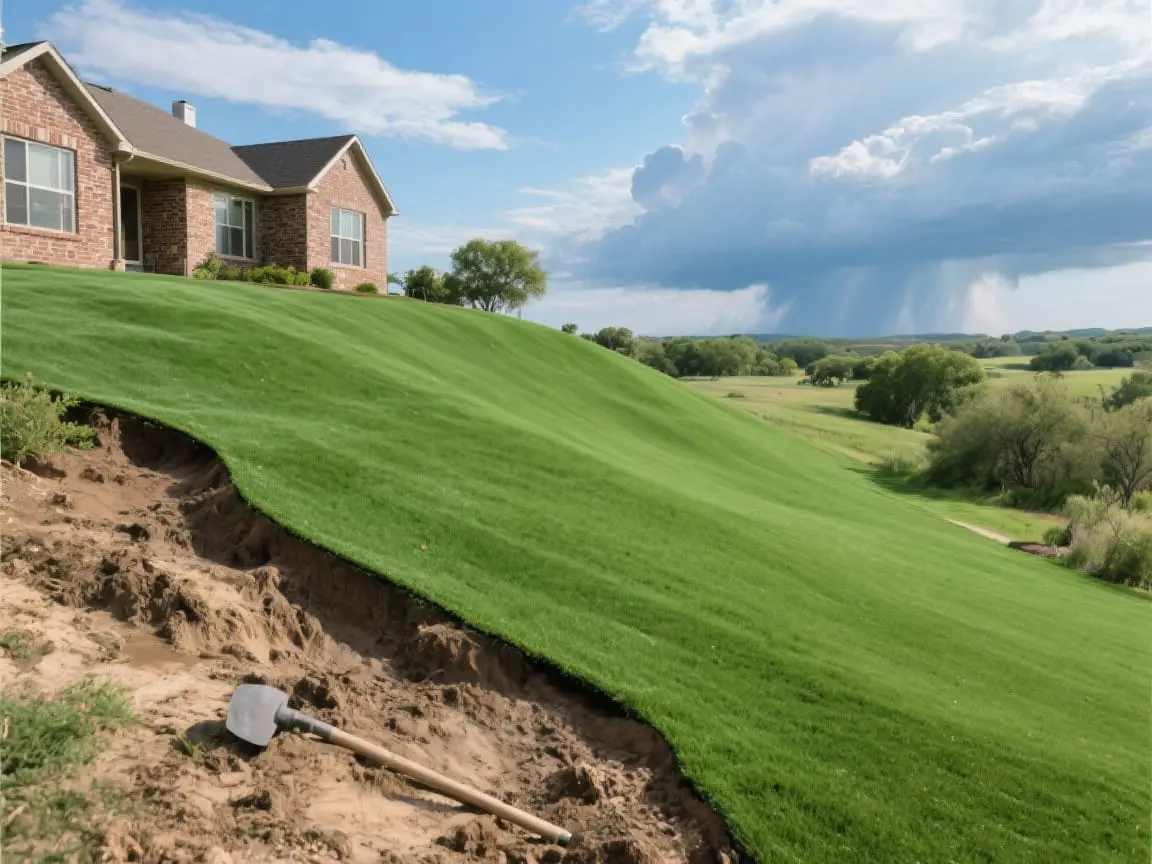
Yes, installing artificial turf is one of the most effective and permanent solutions for sloped yards in Texas. It provides a stable, permeable surface that prevents soil erosion from heavy DFW rain, eliminates the difficult and dangerous task of mowing a hill, and maintains a lush, green look year-round.
In this guide, we break down exactly how DFW homeowners can reclaim their sloped landscapes and turn a frustrating problem into a beautiful, functional space.
Why Sloped Yards Are a Nightmare for DFW Homeowners
Living in North Texas, you know the struggle. Our infamous “Black Gumbo” clay soil is the root of the problem. When it gets saturated during a thunderstorm, it becomes heavy and slick. On a slope, that soil has nowhere to go but down, taking your grass and landscaping with it. This leads to constant erosion, unsightly bare patches, and muddy runoff.
Furthermore, mowing a steep grade is not just a hassle; it’s a safety hazard. This is why many homeowners with difficult-to-manage properties switch to our durable Residential Lawn solutions that solve these problems for good.
How We Install Turf on Hillsides: The All American Process
Installing synthetic grass for hillsides requires a specialized process to ensure it never slips, wrinkles, or lifts. It’s not a simple roll-out job; it’s an engineered solution.
Step 1: Aggressive Base Preparation
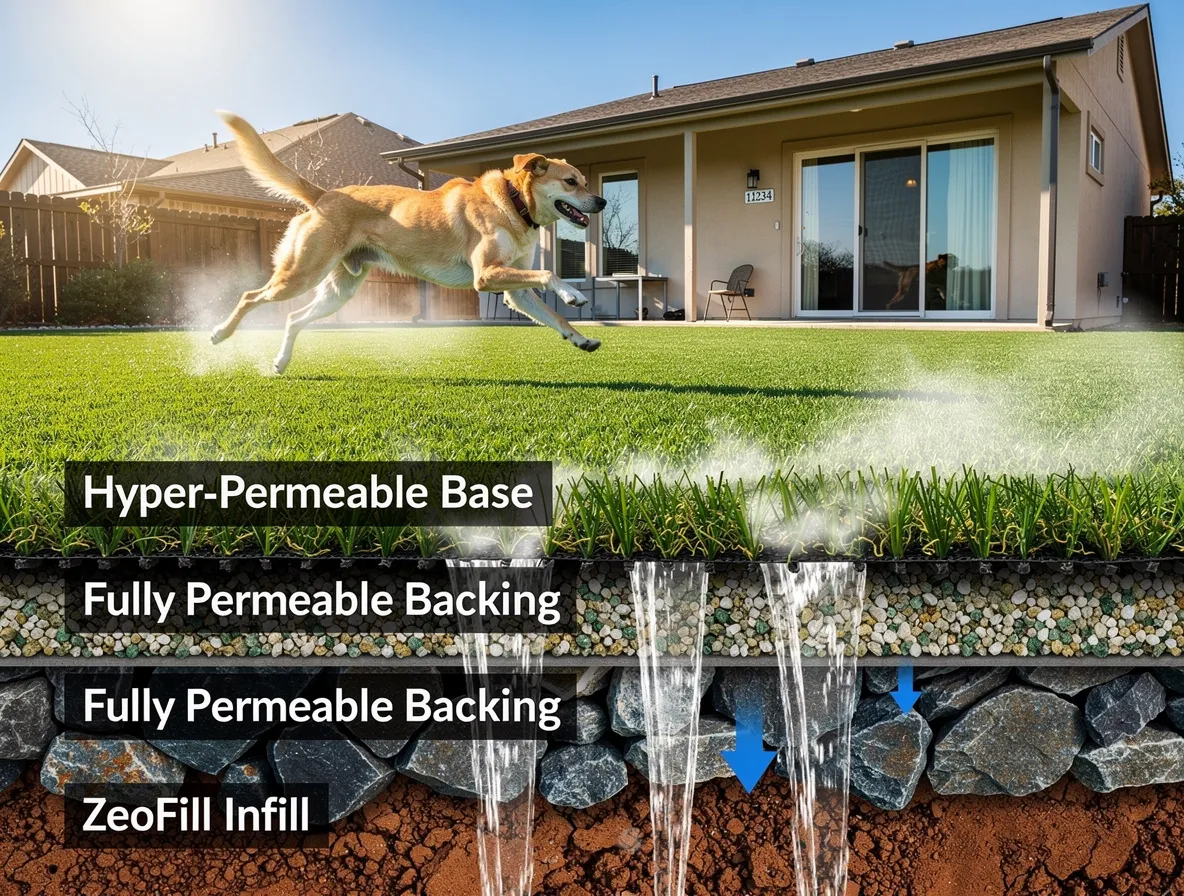
The key to a stable slope is what’s underneath. We excavate the unstable clay soil and install a deeper, compacted base of crushed aggregate. This creates a solid foundation that allows for rapid drainage and prevents the ground from shifting beneath the turf.
Step 2: Strategic Anchoring and Nailing
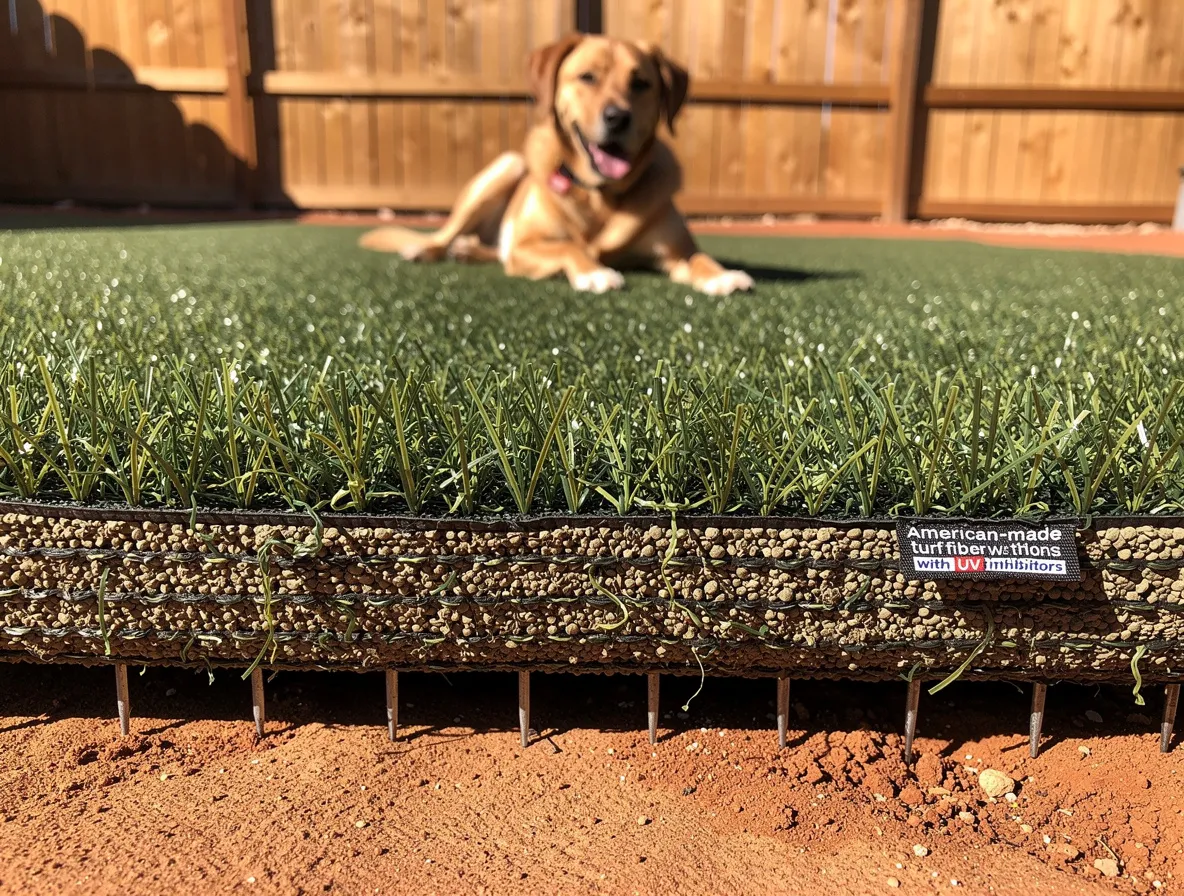
We use extra-long, non-corrosive landscape spikes—often 6 to 8 inches long—and place them much more frequently than on a flat installation. The turf is stretched and secured around the entire perimeter and throughout the body to ensure it’s pinned firmly to the base material, acting like a reinforced blanket over the slope.
Step 3: High-Weight, High-Performance Infill
After the turf is secured, we apply a heavy layer of specialized infill. The sheer weight of the infill acts as a ballast, locking the entire system in place from the top down. This provides the final layer of stability needed to withstand gravity and water flow.
Dealing with Sloped Yards in the DFW Climate
In other parts of the country, a small retaining wall might solve an erosion issue. But here in Dallas-Fort Worth, that’s often not enough. The extreme cycle of 100°+ summer heat and sudden, torrential downpours causes our clay soil to expand and contract dramatically. This movement can destroy traditional landscaping on a slope.
Artificial turf is the perfect landscape solution for sloped yard turf because it moves with the ground, holds the stable aggregate base in place, and allows water to pass straight through without washing away the topsoil. You get perfect drainage without any erosion.
The Bottom Line: A Permanent Fix for Your Problem Hillside
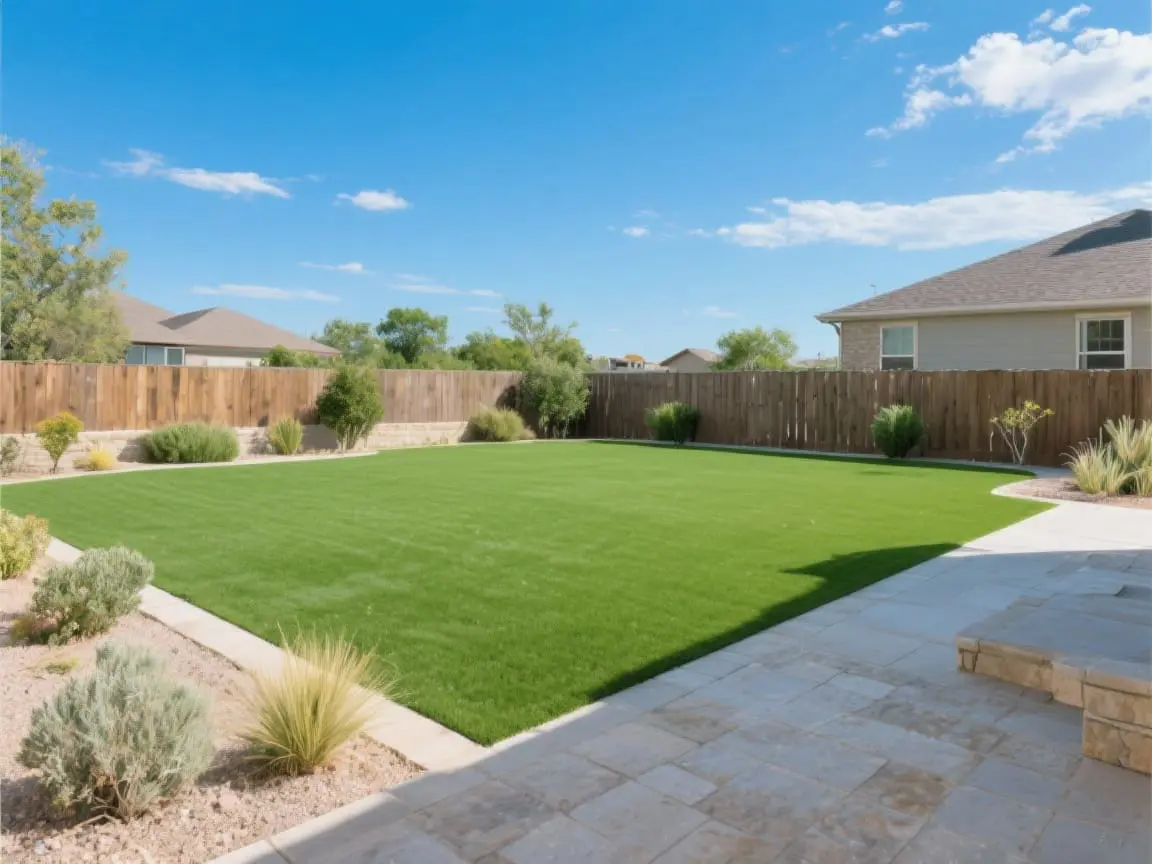
By installing artificial turf, you solve the erosion, drainage, and safety issues of a sloped yard in one step. You get a beautiful, green lawn that looks pristine 365 days a year without the back-breaking work.
Tired of watching your soil wash away after every storm? Let the pros engineer a permanent solution.