What Are the Drainage Requirements for Artificial Turf Around a Pool?
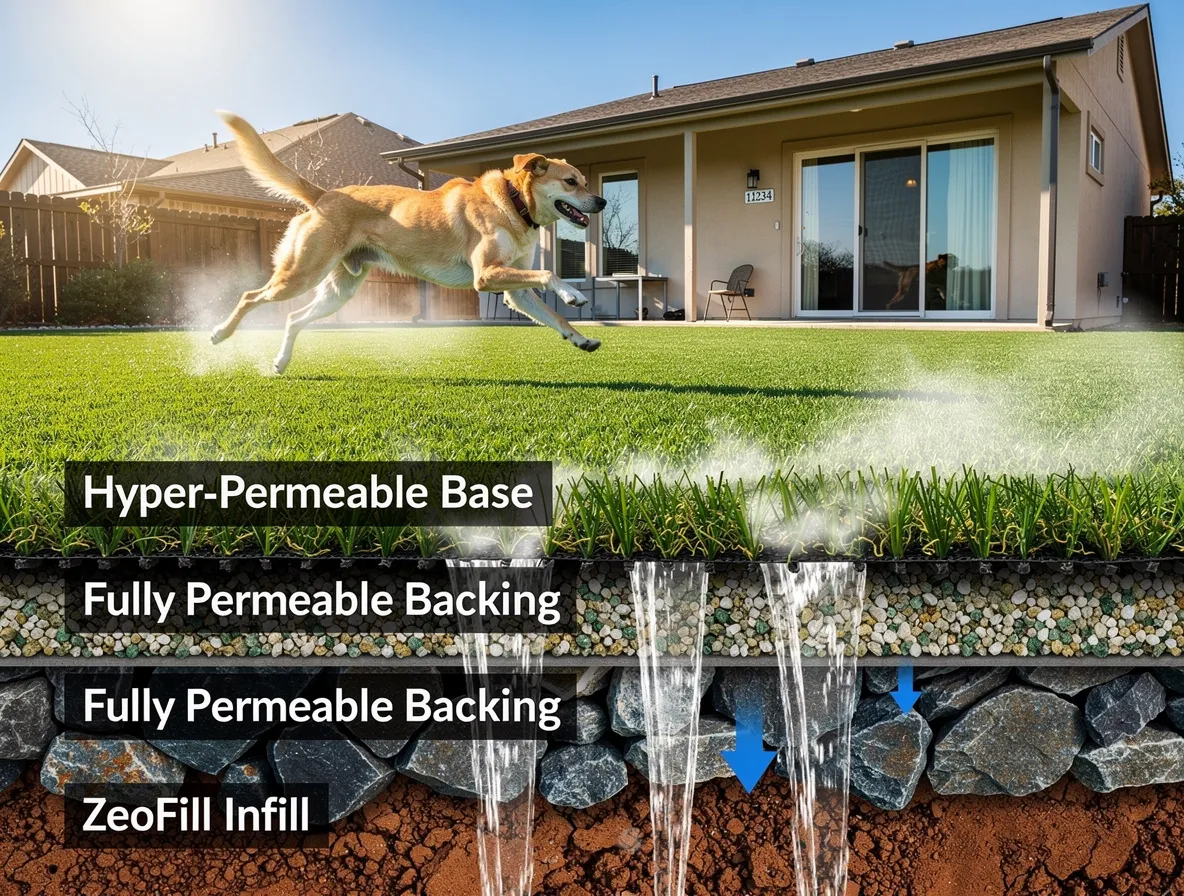
The best way to ensure proper drainage for artificial turf around a DFW pool is by installing a multi-layered aggregate sub-base, using turf with a fully perforated backing, and establishing a slight grade to direct water away from the pool edge. This system is essential for handling both splash-out and heavy Texas rain.
In this guide, we break down exactly how DFW homeowners can get a safe, dry, and beautiful poolside that lasts for years.
Why Pool Turf Drainage is Critical for DFW Homes
In North Texas, we don’t have the luxury of sandy, fast-draining soil. We have heavy “Black Gumbo” clay. This dense soil expands when wet and shrinks and cracks when dry, and it absolutely refuses to absorb water quickly. Laying turf directly over unprepared clay soil around a pool is a recipe for disaster, leading to stagnant, smelly water, mosquito breeding grounds, and a squishy, unstable surface. Proper drainage isn’t a luxury; it’s the most crucial element of a successful poolside installation. This is why a professionally engineered base is a core component of our Residential Lawn solutions.
A Technical Guide to Proper Pool Deck Turf Drainage
A durable, fast-draining pool surround isn’t just about the turf itself—it’s about the entire system built beneath it. Here are the non-negotiable components for a successful DFW installation.
Step 1: Proper Excavation & A Permeable Sub-Base
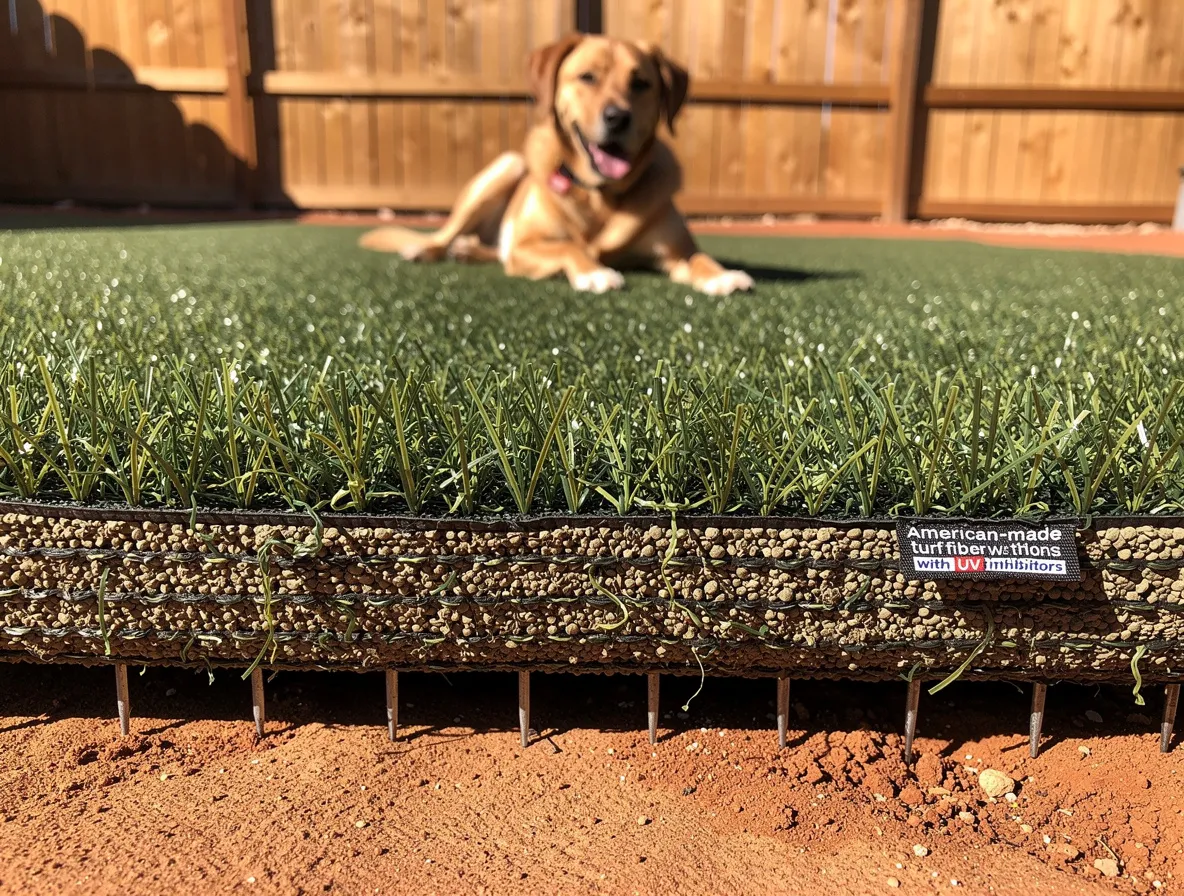
We start by excavating several inches of the native clay soil. This is replaced with a compacted base of crushed limestone or decomposed granite. This aggregate layer creates a stable foundation that, unlike clay, allows water to pass through it freely and drain into the ground below, preventing water from getting trapped under your turf.
Step 2: A Slight, Functional Grade
The sub-base must be meticulously graded with a slight slope—typically 1% to 2%—leading away from the pool’s coping. This is subtle enough that you won’t feel it when walking, but it’s critical for actively channeling water away from the pool’s edge and preventing it from sitting on the surface. This ensures your pool deck is usable again just minutes after a big splash or a sudden downpour.
Step 3: Turf with Maximum Perforation
Not all artificial grass is suitable for poolside applications. We exclusively use turf products with fully perforated backings. These backings are riddled with small, precisely punched drainage holes that allow water to flow directly through the turf and into the aggregate base below at an extremely high rate, measured in hundreds of inches per hour.
Handling Dallas Pool Drainage: Splashes, Storms, and Clay
A professionally installed system is built to withstand the unique challenges of the DFW climate. During our 100°+ summers, a waterlogged turf area can become a breeding ground for algae and insects. Our drainage systems eliminate that risk. When the inevitable summer thunderstorm hits, your pool surround won’t turn into a muddy swamp. The system is designed to handle massive volumes of water, keeping your backyard clean and accessible while protecting your pool from dirt and debris runoff.
The Bottom Line: Don’t Risk a Soggy Pool Deck
Achieving perfect drainage around a pool is a technical science. The wrong base material, improper grading, or a non-permeable turf product will lead to costly problems and a ruined backyard experience. It’s the one part of the job that must be done perfectly from the start.
Don’t want to deal with the complexities of soil mechanics and hydro-engineering? Let the pros handle it.