
What’s the Best Turf Infill: Sand vs. Silica in DFW?
The best turf infill for the DFW area is typically a high-quality, rounded silica sand. While standard sand is a cheaper option, silica sand’s uniform round shape, superior drainage properties, and durability make it the ideal choice for Texas lawns, ensuring longevity and a more comfortable feel.
In this guide, we break down exactly how DFW homeowners can choose the right infill to protect their artificial turf investment from the Texas climate.
Why Your Turf Infill Choice Matters in Texas
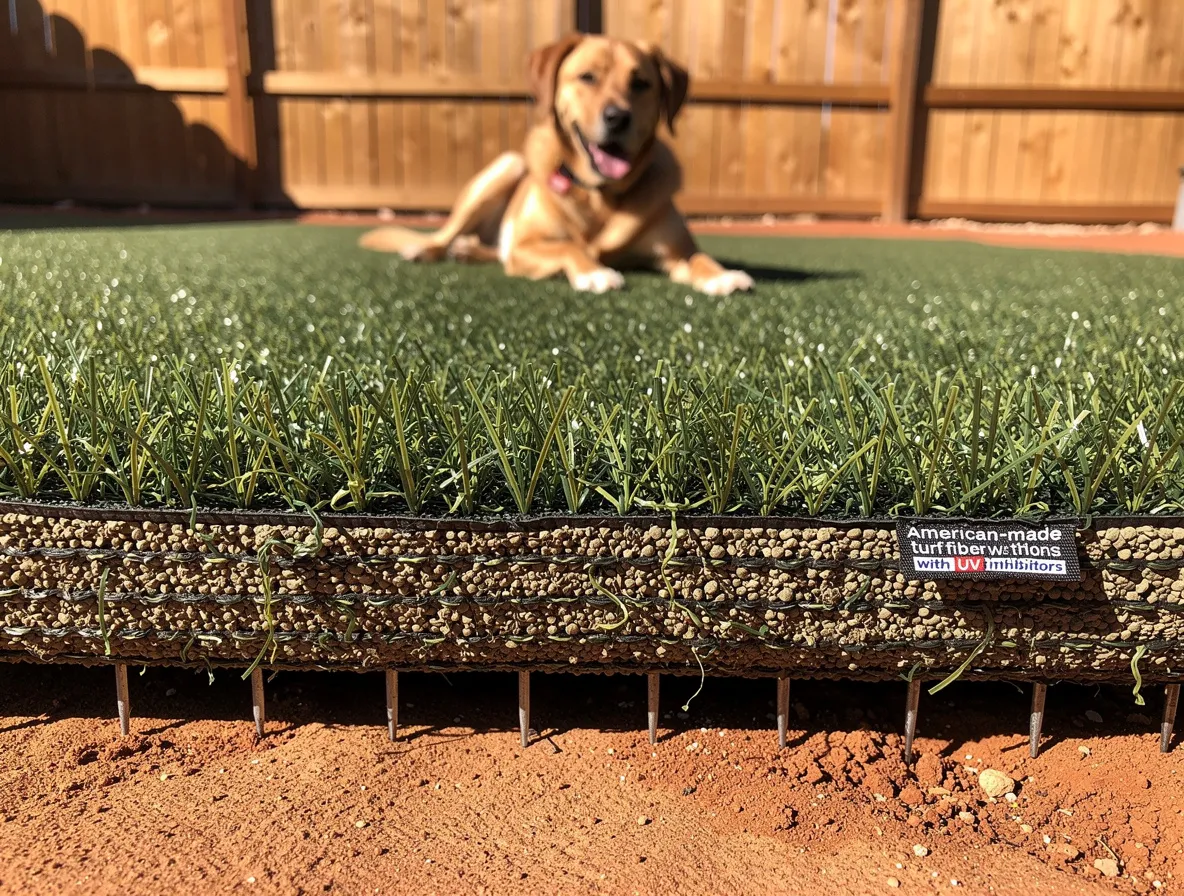
Infill is the granular material spread between the artificial grass blades. It’s not just “sand”—it’s a critical component of the entire turf system. In North Texas, infill serves three vital functions: it helps the turf blades stand upright, it provides a soft, cushioned feel underfoot, and it weighs the turf down. Choosing the wrong infill can lead to premature wear, poor drainage, and a turf surface that gets excessively hot.
This is especially critical for high-traffic applications, which is why our Commercial Turf installations rely on premium materials to guarantee performance and durability.
Silica Sand vs. Standard Sand: A Head-to-Head Comparison
While they might look similar from a distance, the performance difference between standard “play sand” and engineered silica sand is massive, especially in our climate.
Standard Sand (Angular Sand)
This is typically the most basic and inexpensive infill option. It’s composed of sub-angular grains, meaning the particles have sharp, jagged edges.
- Pros: Very low cost.
- Cons: The sharp edges can act like sandpaper, causing premature wear and tear on your turf fibers. It compacts easily, especially after heavy DFW rainstorms, which can impede drainage. It also tends to retain more heat.
Rounded Silica Sand (The Professional’s Choice)
This is a manufactured product where the sand has been washed, graded, and tumbled to create a uniformly round grain. This is the baseline standard for quality installations at All American Turf Texas.
- Pros: The round shape is gentle on turf fibers, significantly extending the life of your lawn. It resists compaction, allowing water to drain through freely. The uniform shape helps dissipate heat more effectively than angular sand.
- Cons: Higher upfront cost than standard sand.
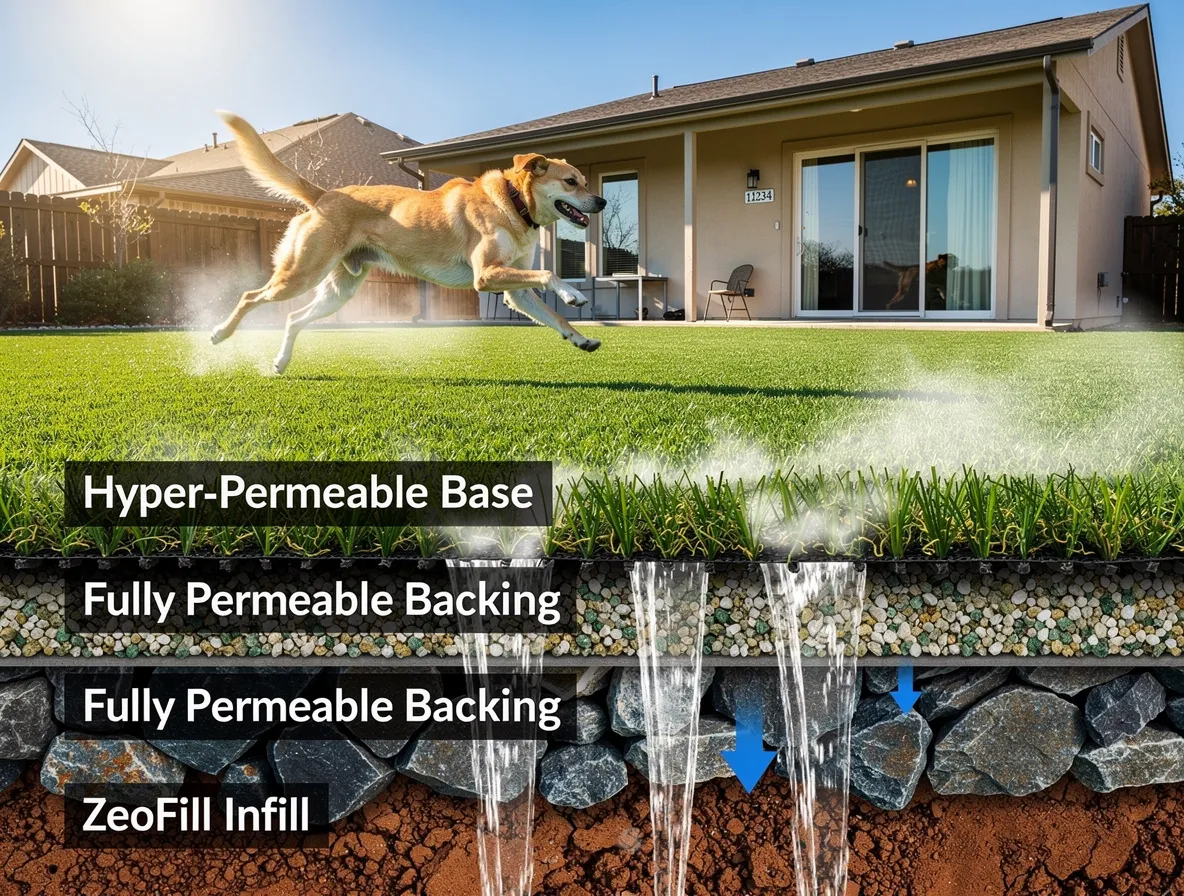
For pet owners concerned about odors, we often recommend an upgrade to a Zeolite-based infill, which is a key component of our advanced Pet Turf & K9 Systems designed to neutralize ammonia in pet urine.
Choosing an Infill for the DFW Climate & Soil
Here in the Dallas-Fort Worth Metroplex, every decision has to account for our unique environmental challenges. The 100°+ summer days mean heat dissipation is a top priority. A quality, rounded silica infill won’t get as scorching hot as cheaper, denser sands.
Furthermore, our infamous “gumbo” clay soil demands a turf system with excellent drainage. If your infill layer compacts into a hard pan, it defeats the purpose of the permeable base we install underneath. Rounded silica sand ensures that water can pass through the turf and away from your clay soil foundation, preventing pooling and muddy spots.
The Bottom Line: Silica is the Smarter Investment
While using standard sand might save a small amount on the initial installation cost, it’s a poor long-term decision. The premature wear on your turf fibers and potential for drainage problems will cost you far more down the road. Investing in a high-quality, rounded silica sand protects your primary asset—the turf itself—ensuring it performs beautifully for years, even under the harsh Texas sun.
Don’t guess on the technical details. Let the pros build your turf system right from the base up.