How to Clean Pet Waste and Odors from Artificial Turf
The best way to clean pet waste from artificial turf is to first remove solid waste, then thoroughly rinse the area with a hose. To eliminate lingering smells, especially dog urine odor, apply a professional, pet-friendly turf cleaning solution and let it work before a final rinse. In this guide, we break down exactly how DFW homeowners can keep their synthetic lawns fresh and clean, even with multiple pets.
Why Cleaning Pet Turf Matters for Texas Lawns
In North Texas, our intense summer heat can bake urine and bacteria into your turf system, creating stubborn ammonia smells. Unlike natural grass that can break down waste over time, synthetic turf requires a proactive cleaning approach to stay sanitary and odor-free. Proper cleaning prevents odor buildup and ensures your yard is a safe, pleasant place for both your family and your pets. This is why many DFW homeowners who are tired of muddy, smelly yards switch to our specialized Pet Turf & K9 Systems.
A Step-by-Step Guide to Cleaning Your Pet Turf
Step 1: Solid Waste Removal
The first step is the most straightforward. Remove any solid waste as you would from a regular lawn, using a poop bag or a scooper. It’s best to do this as soon as you spot it to prevent it from being stepped on and ground into the turf fibers.
Step 2: Rinse, Rinse, Rinse
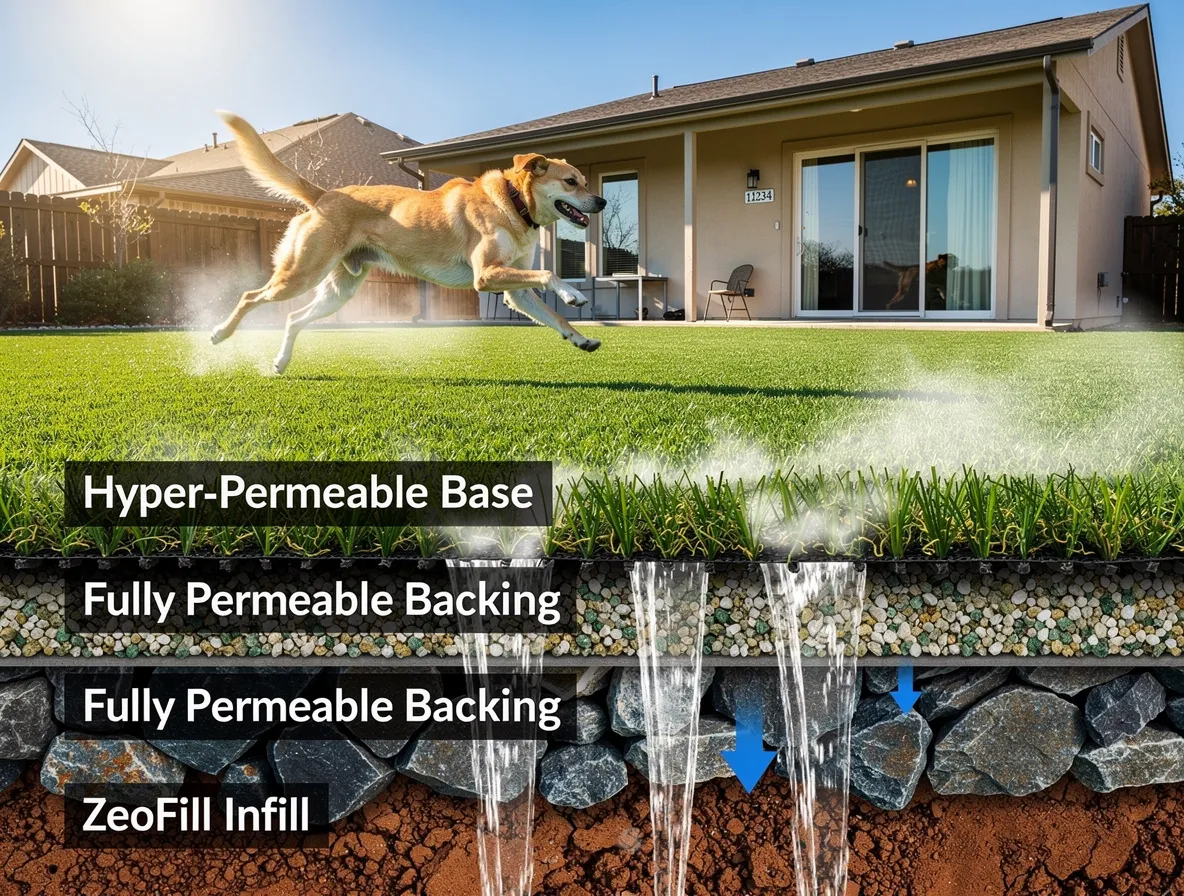
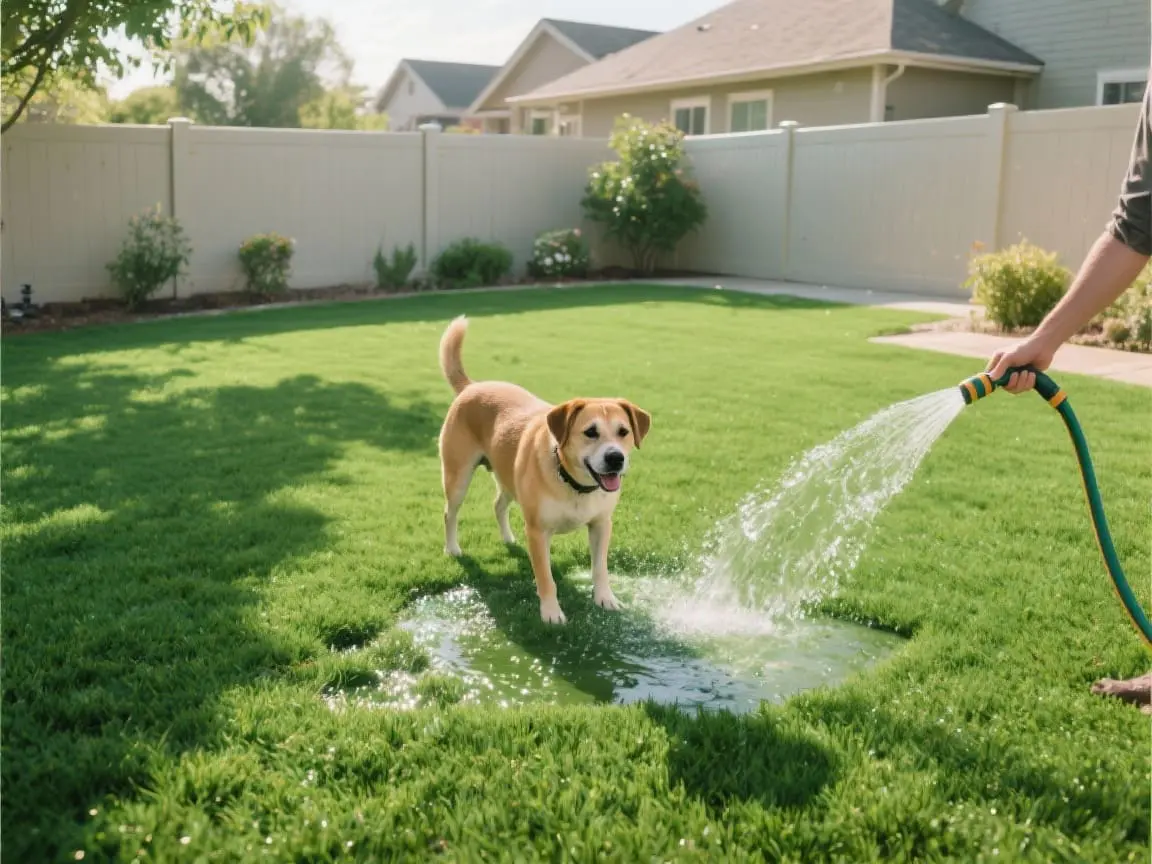
After removing the solids, use a garden hose to rinse the area thoroughly. This washes away any immediate residue. For urine spots, a quick, frequent rinse is the single best preventative measure you can take. Rinsing dilutes the uric acid and helps wash it down through the turf’s drainage system.
Step 3: Apply a Pet-Friendly Turf Cleaner
Water alone won’t neutralize the bacteria and ammonia from dog urine. You need a dedicated, pet-friendly turf cleaning solution. Avoid harsh chemicals like bleach, which can damage your turf’s backing. We recommend enzymatic cleaners, as they are specifically designed to break down the organic compounds in pet waste that cause odors. Simply spray the affected areas according to the product’s directions.
Step 4: The Optional Power-Brush
For a deeper clean and to revive turf fibers that may have matted down, you can use a stiff-bristled, non-metal brush to gently work the cleaning solution into the base of the turf. Brushing against the grain of the fibers also helps your lawn look its best.
Dealing with Pet Odors in the DFW Heat
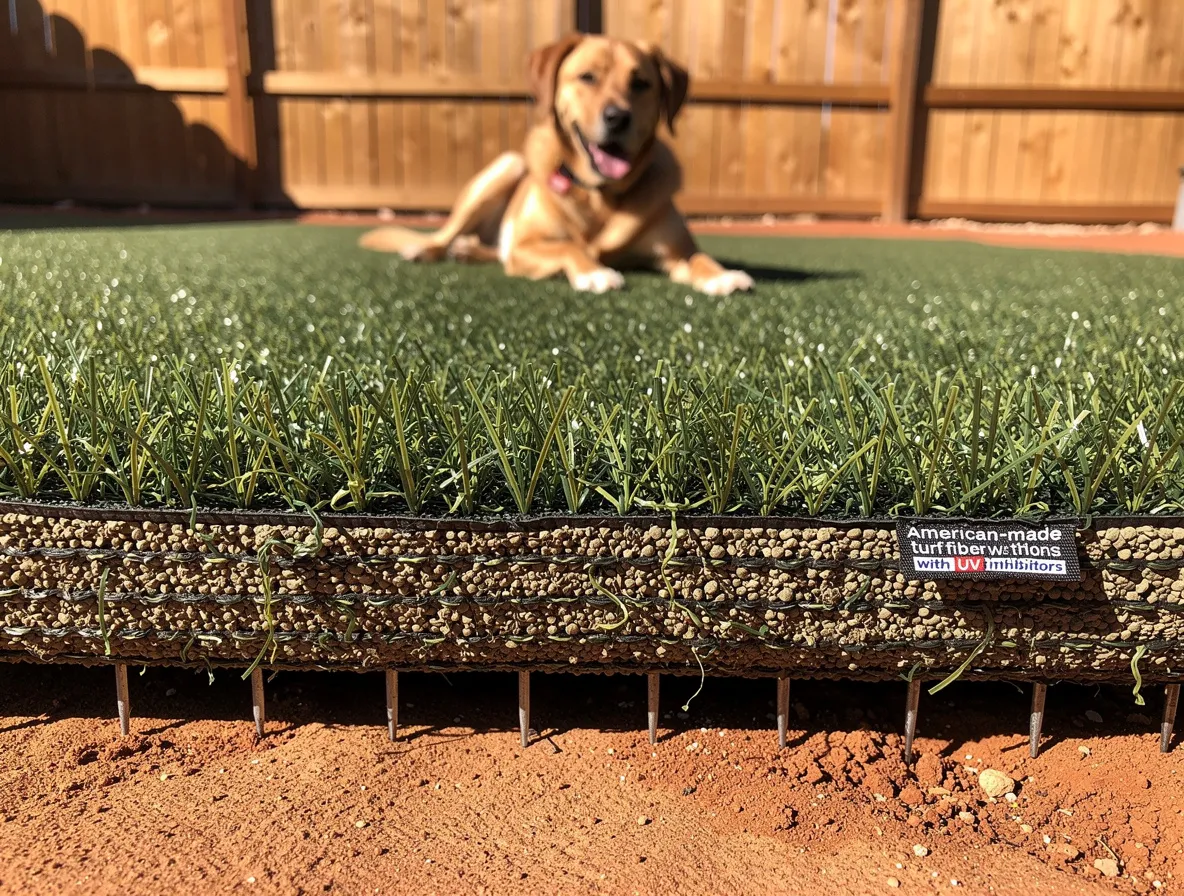
The 100°+ summer days in Dallas-Fort Worth can amplify pet odors exponentially. In cooler climates, simple rinsing might be enough, but here, the heat acts like an oven. This is why a proper installation with the right infill is critical. Our pet systems utilize antimicrobial infills like Zeolite, which are designed to trap and neutralize ammonia gas from urine before it ever becomes a noticeable smell. A cheap sand infill simply won’t stand up to the Texas heat and a family of dogs.
The Bottom Line on Pet Turf Maintenance
Keeping your artificial turf clean and fresh is simple with a consistent routine: scoop solids promptly, rinse urine spots often, and use a quality enzymatic cleaner weekly or bi-weekly depending on usage. This small amount of maintenance ensures your investment remains a beautiful, odor-free asset for years to come. Don’t want to deal with the hassle of pet odors and a muddy lawn? Let the pros engineer a solution for you.