How Do You Prevent Drainage Issues with Artificial Turf in Texas?
The best way to prevent drainage issues is with a professionally engineered sub-base of crushed aggregate, a properly graded surface, and choosing a turf product with a highly permeable backing. This system ensures that even the most intense DFW downpours drain away quickly, preventing pooling and protecting your investment. In this guide, we break down exactly how DFW homeowners can guarantee a mud-free, puddle-free lawn for years to come.
Why Proper Drainage is Non-Negotiable for DFW Turf
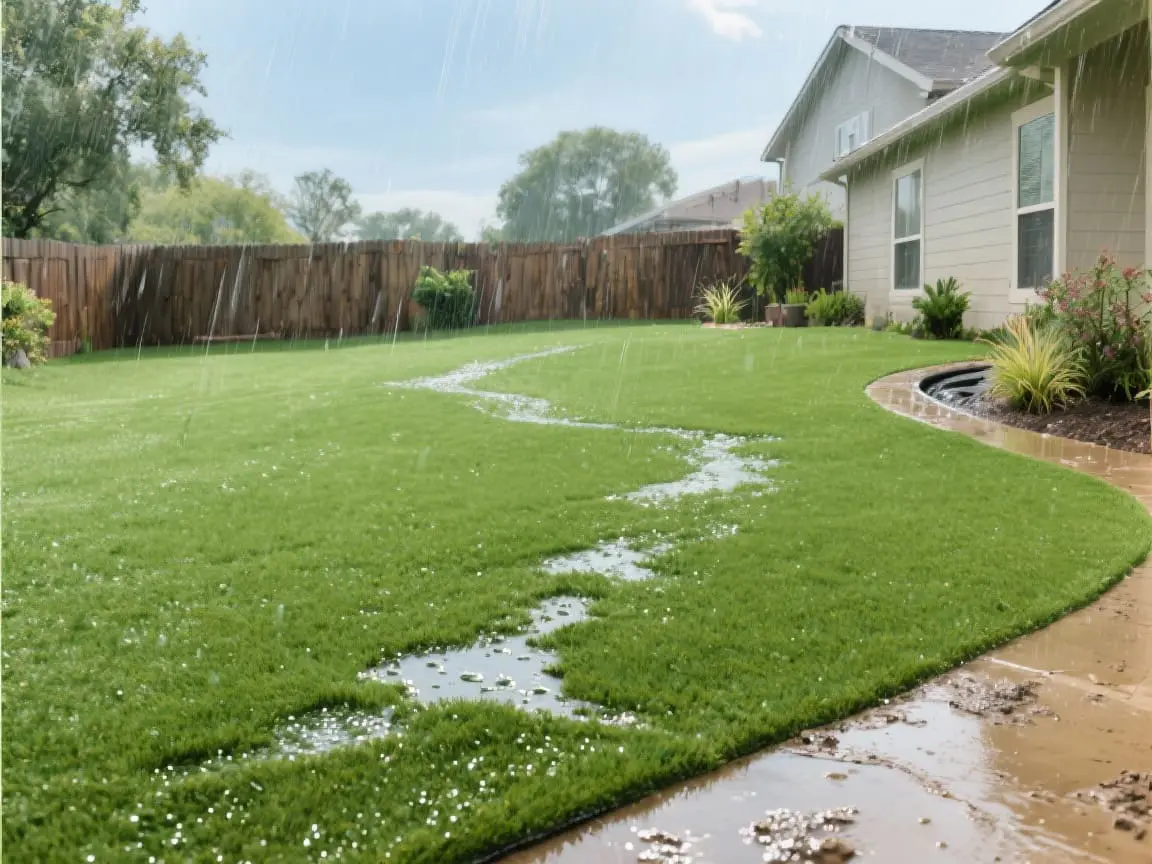
Here in North Texas, our soil is our biggest enemy. The infamous “black gumbo” clay soil is dense, expands when wet, and becomes almost concrete-hard when dry. It simply does not allow water to pass through it efficiently. When a standard turf installation is placed on top of this clay without proper site preparation, you create a virtual swimming pool in your backyard after every storm. This is why a professionally installed drainage system is the most critical component of a lasting and functional residential turf lawn.
A Step-by-Step Guide to Professional Turf Drainage Installation
A beautiful turf lawn is only as good as the groundwork beneath it. Preventing water issues isn’t about the grass itself; it’s about the comprehensive system we build. Here’s how the experts at All American Turf get it right every time.
Step 1: Deep Excavation of Native Clay Soil
We don’t just scrape the surface. Our process starts by excavating 3-4 inches of the native DFW clay soil. Removing this impermeable layer is the essential first step to creating a space where water can go. This ensures that water has a place to drain instead of getting trapped between the turf backing and the hard clay.
Step 2: Building the Right Sub-Base
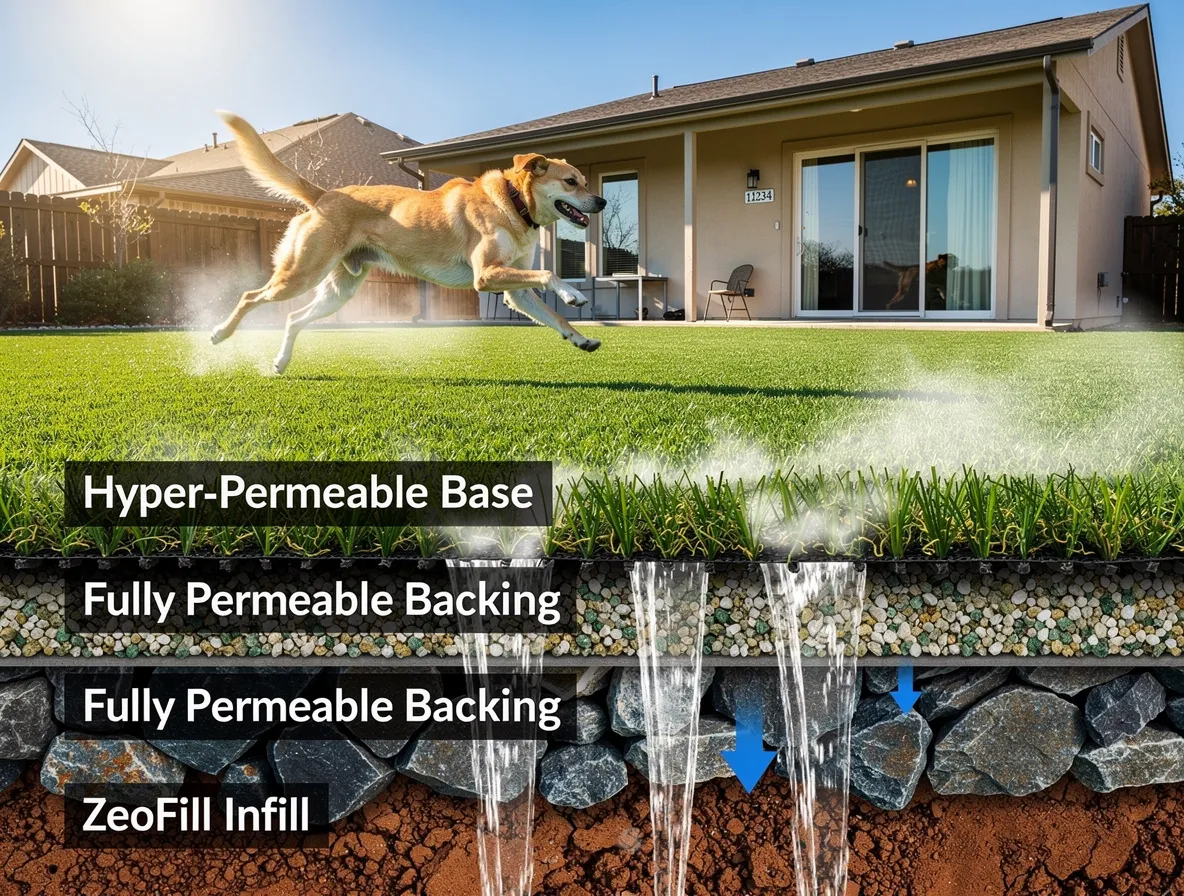
The best artificial turf base for drainage in Texas is a crushed granite or similar limestone aggregate. We install a multi-inch layer of this material. Unlike sand or soil, this aggregate creates thousands of tiny voids, forming a massive French drain under your entire lawn. This base can hold a significant amount of water while it slowly percolates into the ground below.
Step 3: Compaction and Precise Grading
Once the base is in place, we use heavy-duty compactors to create a firm, stable foundation. During this process, we create a subtle grade—typically 1-2%—that directs water flow towards the street or designated drainage areas. This prevents water from sitting stagnant, even during prolonged rain.
Step 4: Choosing a High-Flow Turf Backing
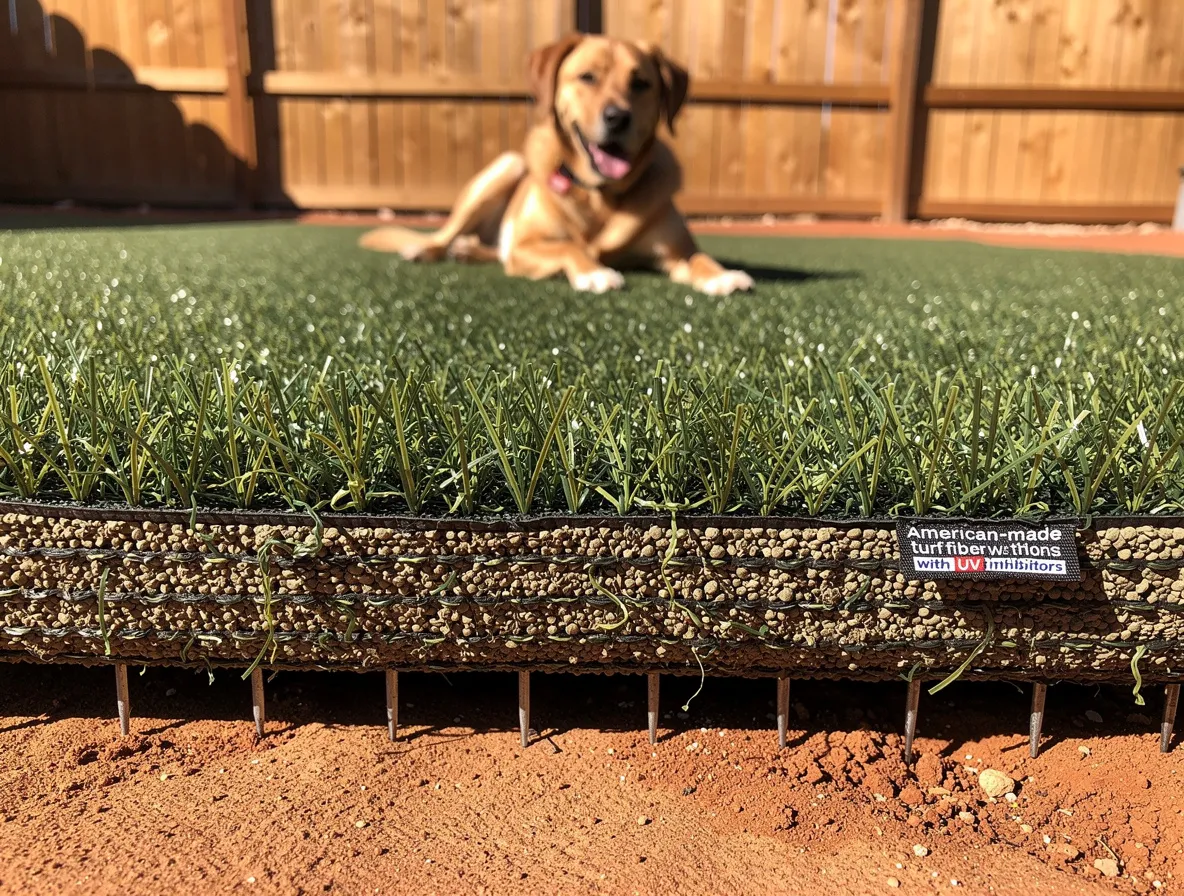
Not all artificial grass is made equal. We use products with fully permeable, hole-punched backings designed for maximum drainage. These systems can drain hundreds of inches of water per hour, far exceeding anything a Texas thunderstorm can throw at it. This ensures water moves off the surface and into the sub-base immediately.
Dealing with Drainage in the DFW Climate
In cooler, sandier climates, installers can sometimes get away with a minimal base. That approach is a recipe for disaster here in Dallas-Fort Worth. The combination of our 100°+ summers that bake the clay into a brick, followed by sudden, intense thunderstorms, requires an over-engineered solution. Our DFW turf expertise means we build your lawn’s foundation like a highway road-base, specifically to counteract the volatile nature of our local soil and weather patterns.
The Bottom Line: A Drainage System You Can Trust
When it comes to artificial grass, what’s underneath is more important than what’s on top. A proper drainage system prevents pooling, eliminates odors, and ensures the longevity of your lawn. Don’t let an improper installation turn your dream yard into a muddy swamp.
Don’t want to deal with the complexities of Texas turf drainage solutions? Let the pros handle it and guarantee a perfect result.