How Do You Prevent Drainage Problems with Artificial Turf in DFW?
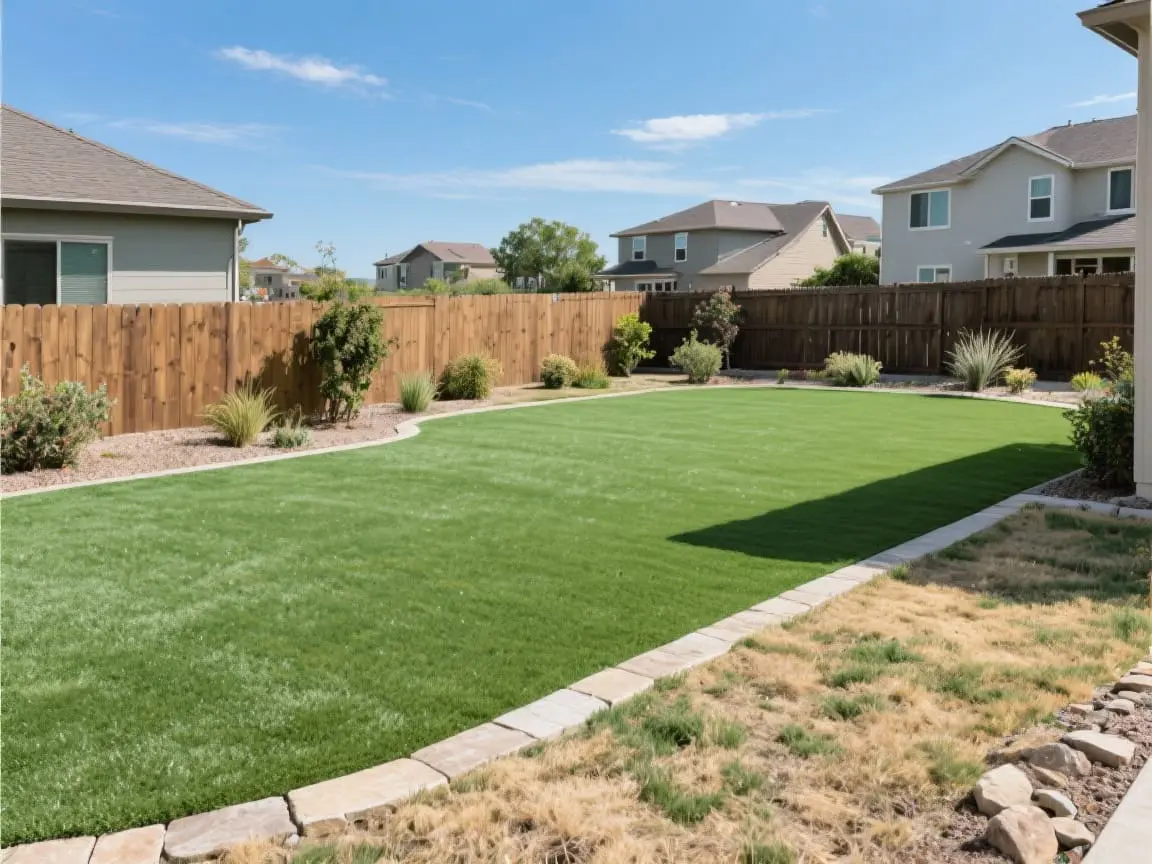
The best way to prevent artificial turf drainage problems is through a multi-layered approach: deep excavation of native soil, installation of a compacted aggregate base, proper grading for water flow, and choosing a turf product with a highly permeable backing. This system ensures water drains through the turf and away from your property. In this guide, we break down exactly how DFW homeowners can guarantee a puddle-free lawn for years to come.
Why Turf Drainage is Critical for Texas Lawns
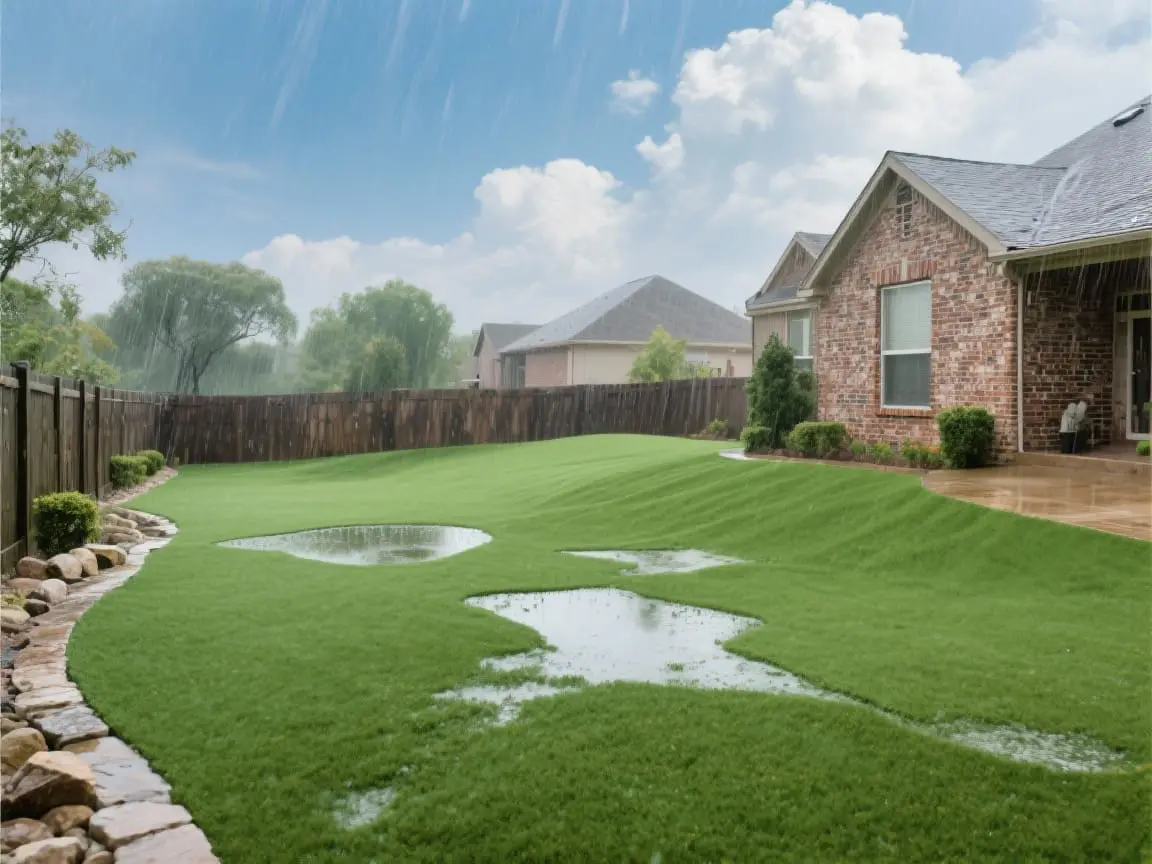
In North Texas, we don’t get gentle showers; we get torrential downpours that can dump inches of rain in under an hour. This is a massive challenge for our native “gumbo” clay soil, which is notoriously dense and slow to absorb water. A poorly installed artificial turf system on top of this soil acts like a plastic sheet over a bathtub with a clogged drain, leading to standing water, unpleasant smells, and a squishy, unstable surface. This is why so many homeowners switch to a professionally installed Residential Lawn system designed to solve these exact issues from the ground up.
A Step-by-Step Guide to Proactive Turf Drainage
Step 1: Deep Excavation and Proper Grading
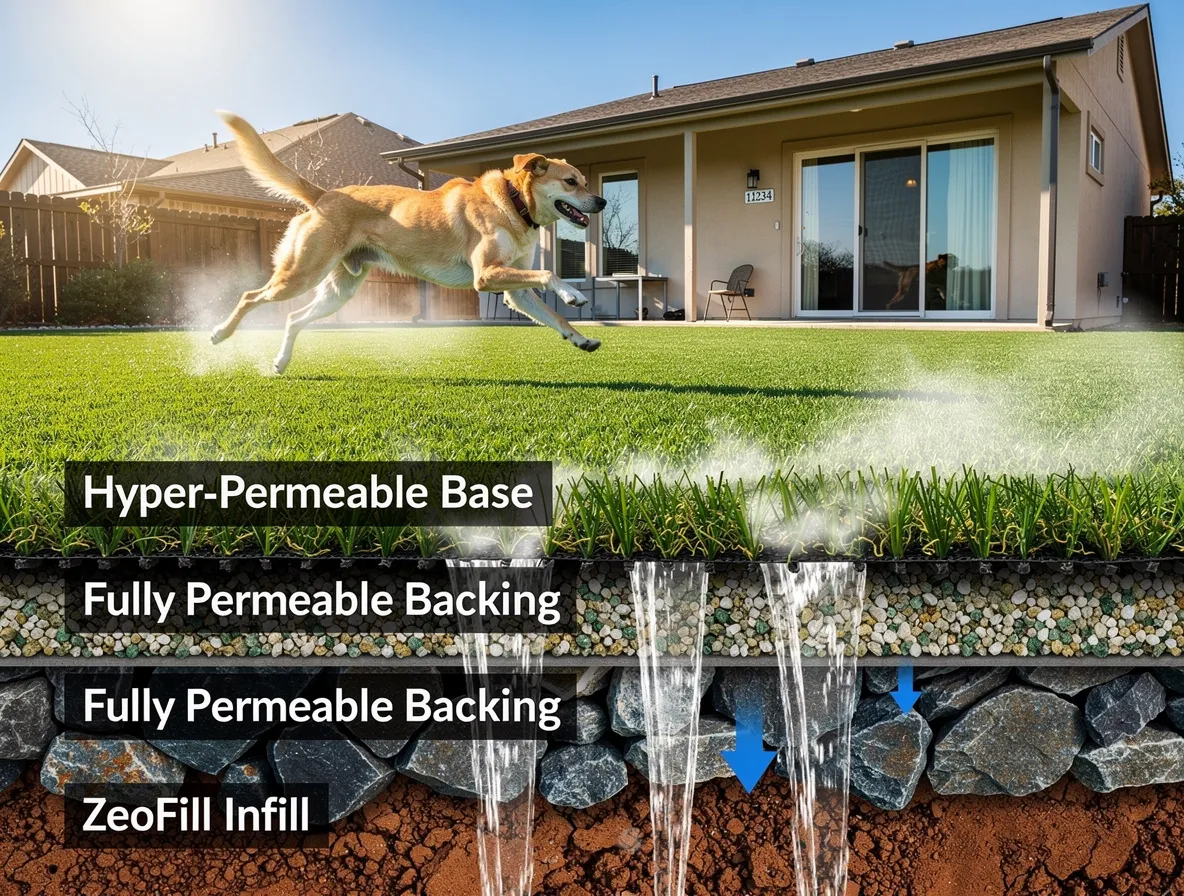
You cannot simply lay turf on top of existing dirt. The first and most critical step is excavating 3-4 inches of the native clay soil. We then use professional grading equipment to create a subtle, almost unnoticeable slope (typically 1-2%) that directs water towards the edges of the lawn or designated drainage areas, preventing water from pooling in the middle.
Step 2: Installing the Permeable Sub-Base
This is the foundation of your entire lawn. We install a multi-inch layer of crushed granite or a similar road-base aggregate. This material is larger and more angular than sand, creating small air pockets that allow water to flow through freely. The base is then heavily compacted to create a stable, porous foundation that will not shift or sink over time.
Step 3: Choosing High-Flow Turf Backing
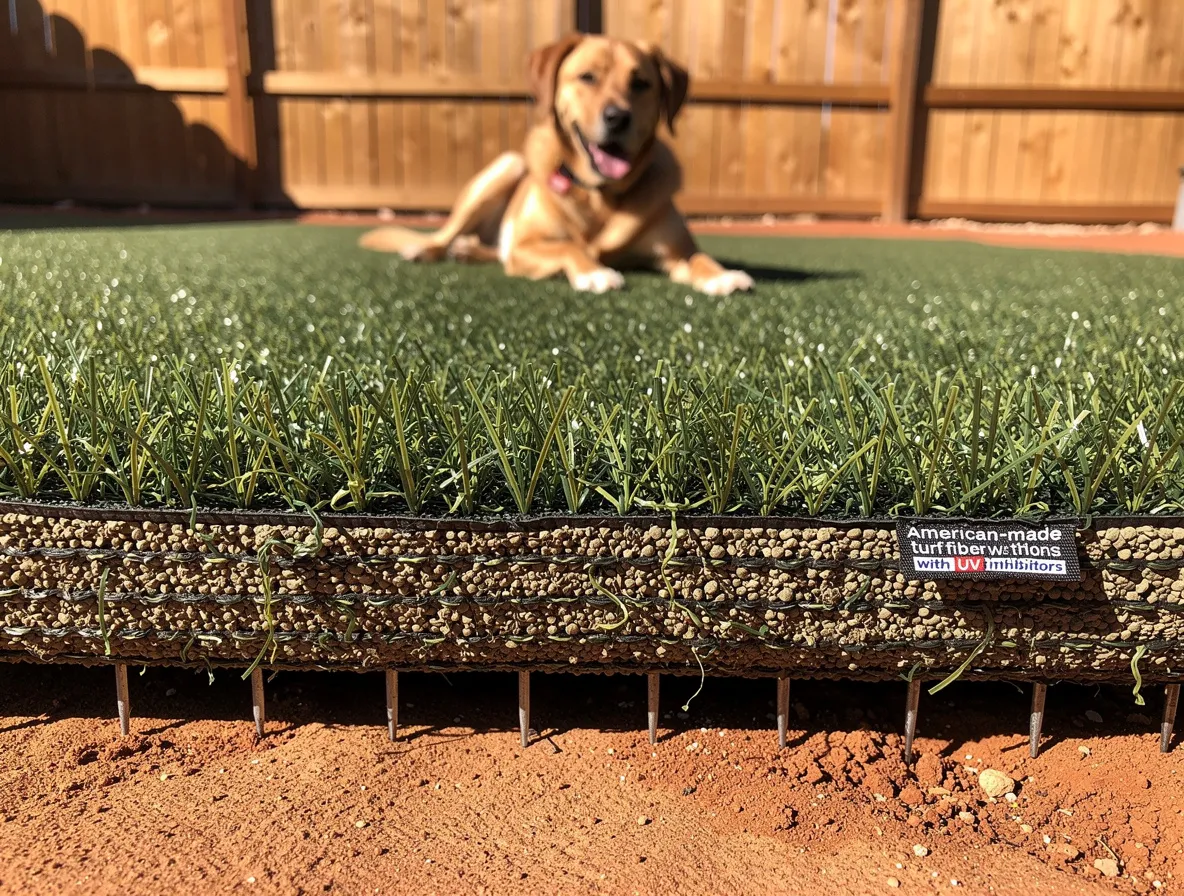
Not all artificial grass is made the same. The backing of the turf—the part the grass blades are tufted into—is punched with drainage holes. Cheaper products have fewer holes, restricting water flow. All American Turf uses products with superior perforation rates, allowing water to pass through the turf as fast as it can drain through the base below, handling even the most intense DFW storms.
Step 4: Using a Non-Absorbent, High-Flow Infill
Infill is the granular material brushed into the turf fibers to help them stand up and provide ballast. While some infills are designed for specific purposes, using a clean, rounded silica sand is one of the best infill for water flow. It doesn’t compact or clump together when wet, ensuring drainage channels remain open from the top of the grass blades all the way down to the sub-base.
Dealing with Drainage and DFW’s “Gumbo” Clay Soil
Here in the Dallas-Fort Worth area, our clay soil is the number one enemy of any landscaping project. It expands significantly when saturated and shrinks and cracks during our 100°+ summers. An installer who doesn’t understand this will use an insufficient base, which the clay will swallow over time, leading to dips, wrinkles, and drainage failure. Our expert turf drainage installation in Dallas involves building a robust aggregate base that acts as a buffer, completely separating your pristine turf from the volatile clay soil beneath.
The Bottom Line: Drainage Isn’t an Add-On, It’s the Entire System
Proper turf drainage isn’t about a single product; it’s about an expertly engineered system from the soil up. Fixing bad turf drainage after the fact is significantly more expensive than doing it right the first time. The excavation, grading, and base preparation are the most important parts of the investment, ensuring your lawn looks great and performs flawlessly for over a decade.
Don’t want to risk a swampy yard? Let the drainage experts at All American Turf handle it.