Can You Install Artificial Turf on a Sloped Yard in Texas?
Yes, you can absolutely install artificial turf on a sloped yard. In fact, it is one of the best long-term solutions for challenging inclines, preventing soil erosion and eliminating the dangerous task of mowing on a hill. Proper installation requires a specialized base preparation and extra anchoring to ensure the turf remains stable and secure.
In this guide, we break down exactly how DFW homeowners can conquer their sloped yards for good.
Why Sloped Yards Are a Problem for Texas Lawns
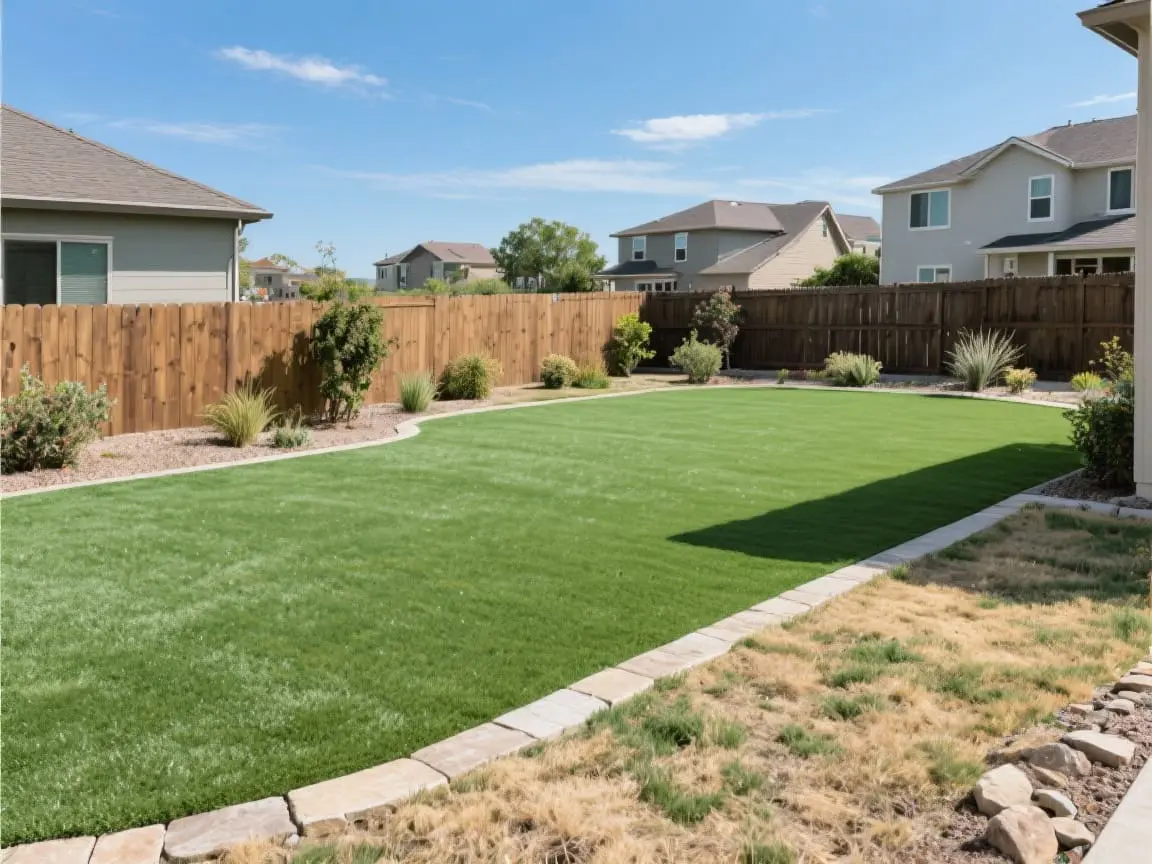
In North Texas, a sloped yard isn’t just a cosmetic issue; it’s a constant battle against nature. The combination of our infamous “gumbo” clay soil and intense rainstorms creates a perfect recipe for soil erosion and washout. Natural grass struggles to establish deep roots on an incline, leading to muddy patches and runoff that can damage your foundation. Furthermore, mowing a steep hill in the brutal Texas summer heat is not only difficult but also a serious safety hazard. This is why many homeowners with challenging topography ultimately switch to our durable residential turf solutions.
Step-by-Step: How We Install Turf on Slopes and Hillsides
Installing synthetic grass on a slope is not a DIY project. It requires technical precision to prevent shifting, wrinkling, or drainage problems down the line. Our professional process ensures a flawless, permanent result.
Step 1: Secure Grading and Site Prep
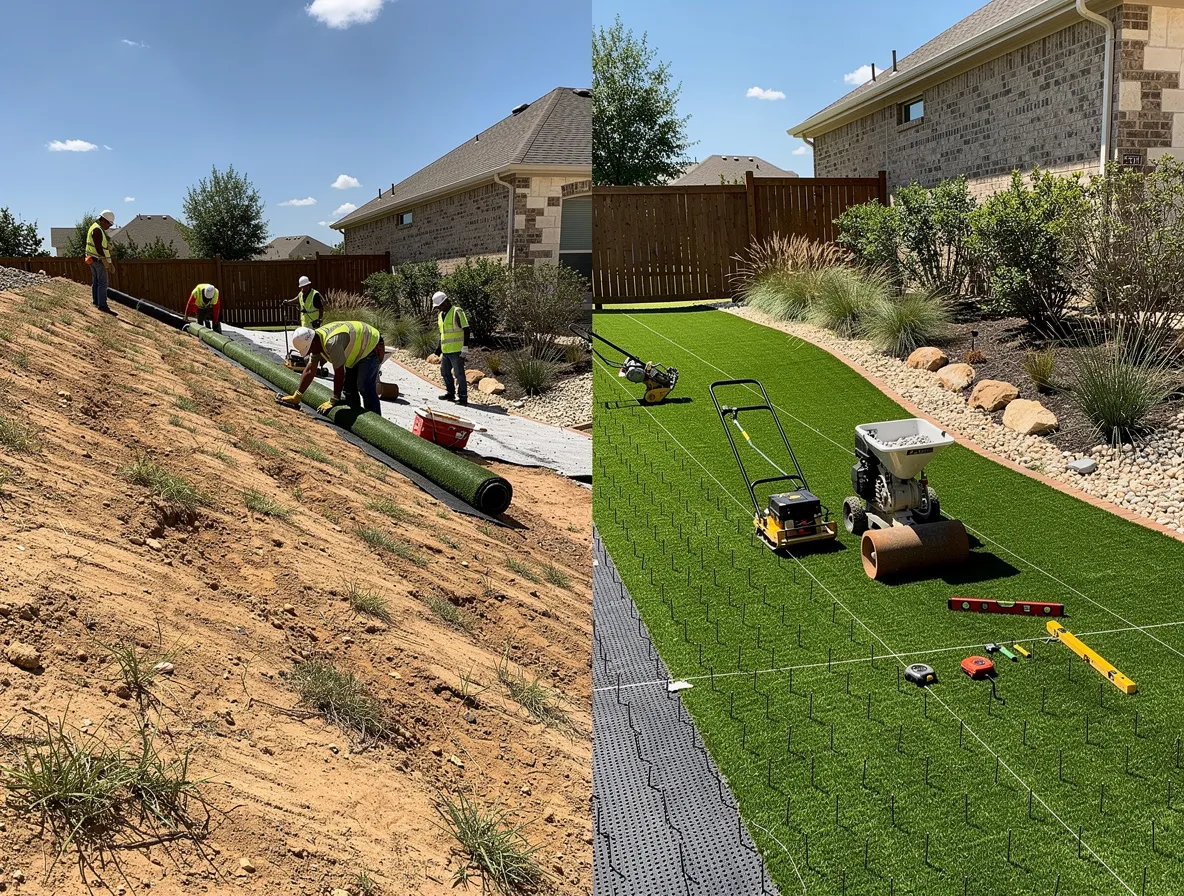
First, we carefully grade the slope to ensure a smooth surface and proper water flow. For the expansive clay soil common in Dallas, we often excavate deeper to create a stable foundation that won’t shift during periods of drought or heavy rain.
Step 2: A Compacted Aggregate Base
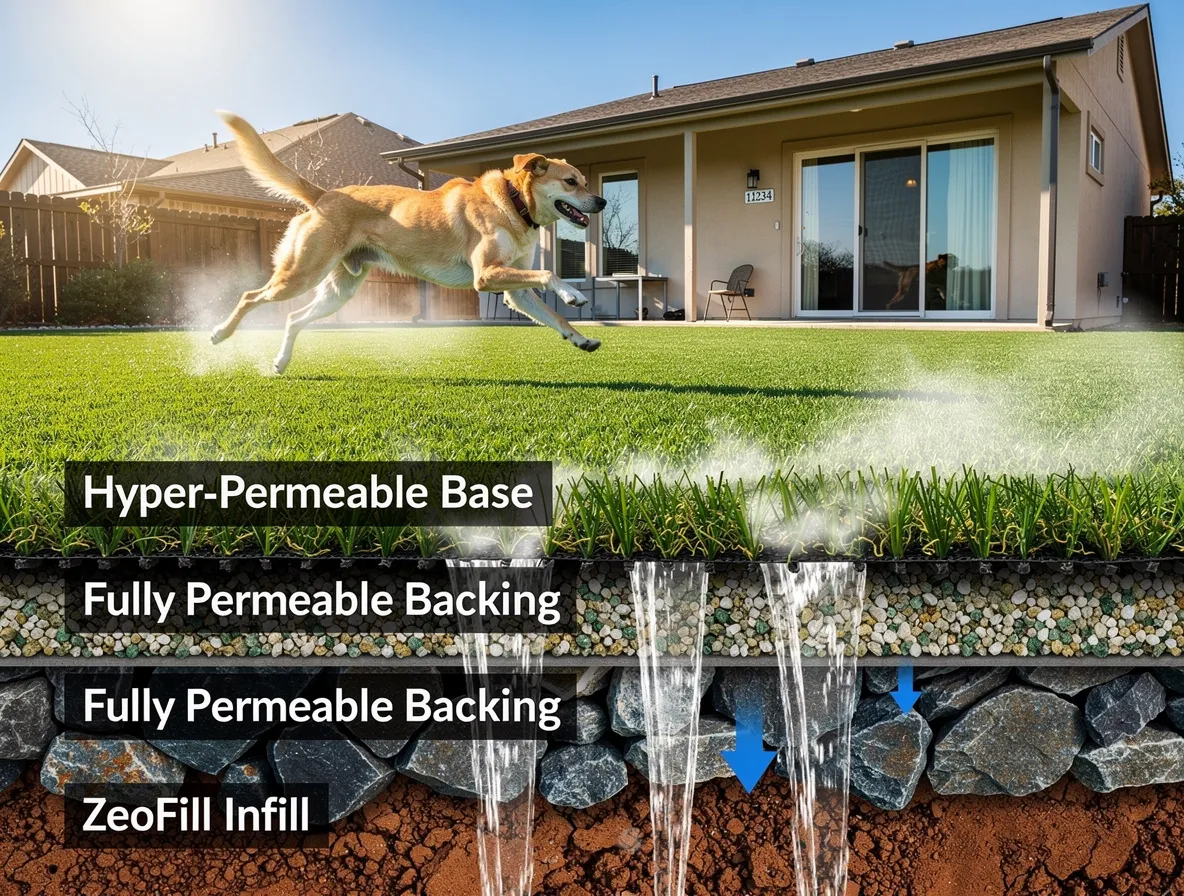
This is the most critical step. We install and compact a multi-layer aggregate base. This crushed rock foundation creates a stable, erosion-proof barrier that locks the ground in place and provides the rapid drainage necessary to handle DFW downpours.
Step 3: Strategic Turf Placement and Anchoring
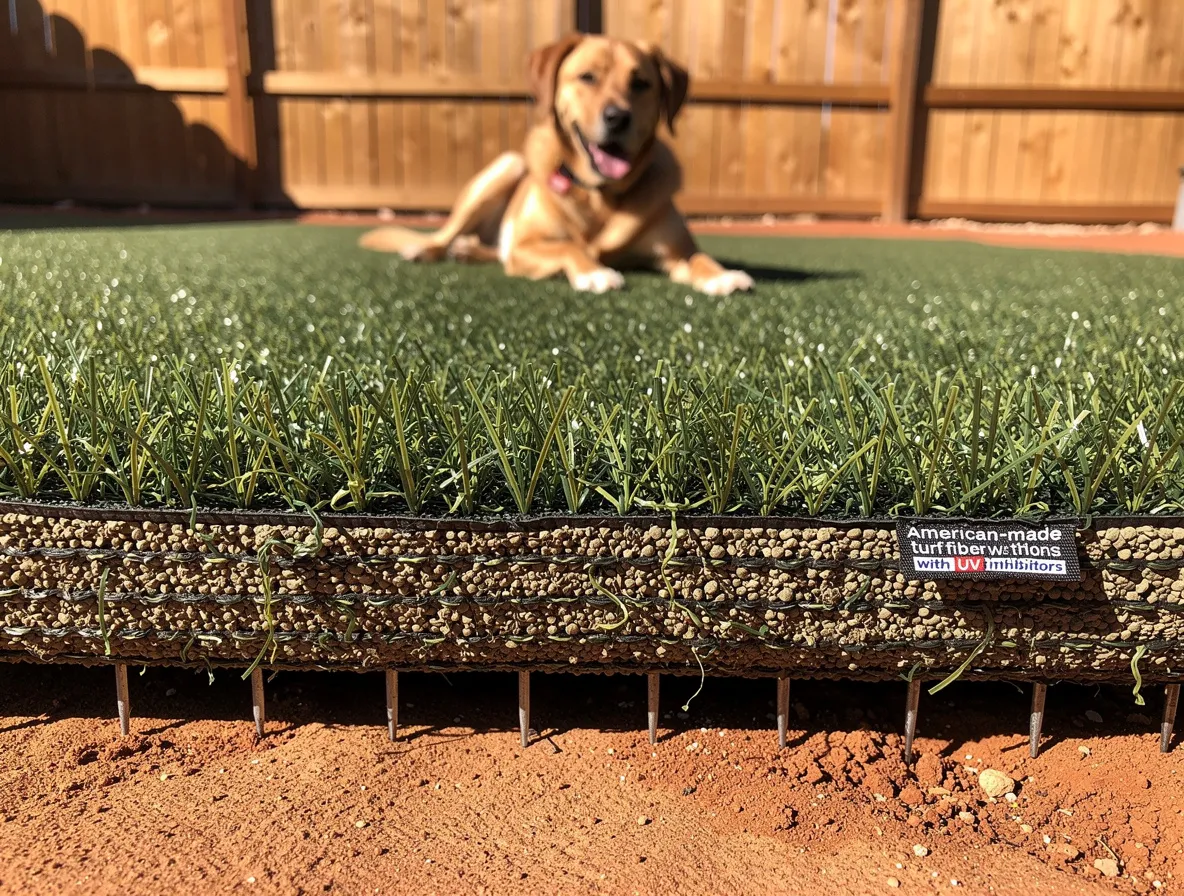
We roll the turf vertically down the slope, not across it, to prevent seam stress. Significantly more non-galvanized turf spikes are used—as often as every 6-8 inches around the perimeter and throughout the body of the turf—to securely anchor the material to the base. This prevents any possibility of the turf slipping or sliding.
Step 4: High-Performance Infill
Finally, we apply a heavy layer of specialized infill. The weight of the infill acts as a ballast, adding thousands of pounds of pressure that pins the turf system firmly to the ground, ensuring it doesn’t move an inch.
Dealing with Sloped Yards in the DFW Climate
Generic installation techniques fail in North Texas. Our climate presents unique challenges that we engineer our systems to overcome. Where other installers might see a problem, we see an opportunity to provide a permanent solution.
- Intense Rainstorms: A properly installed turf system on a slope acts like a protective shield, slowing down rainwater and allowing it to drain through the turf rather than washing away your topsoil.
- Cracking Clay Soil: Our robust base construction prevents the underlying “gumbo” clay from expanding and contracting, which means your turf lawn will never develop wrinkles, lumps, or low spots.
- Mowing Safety: Eliminate the risk of a mower tipping on a wet, steep incline. With artificial turf, your most strenuous maintenance task is an occasional rinse with a hose.
The Bottom Line on Sloped Yards
A sloped yard doesn’t have to be a source of constant frustration and expense. By choosing a professional artificial turf installation, you can transform a difficult-to-maintain hillside into a stable, beautiful, and functional part of your landscape that stays green year-round, regardless of the weather.
Don’t want to deal with erosion or dangerous mowing ever again? Let the pros at All American Turf engineer the perfect solution for your property.