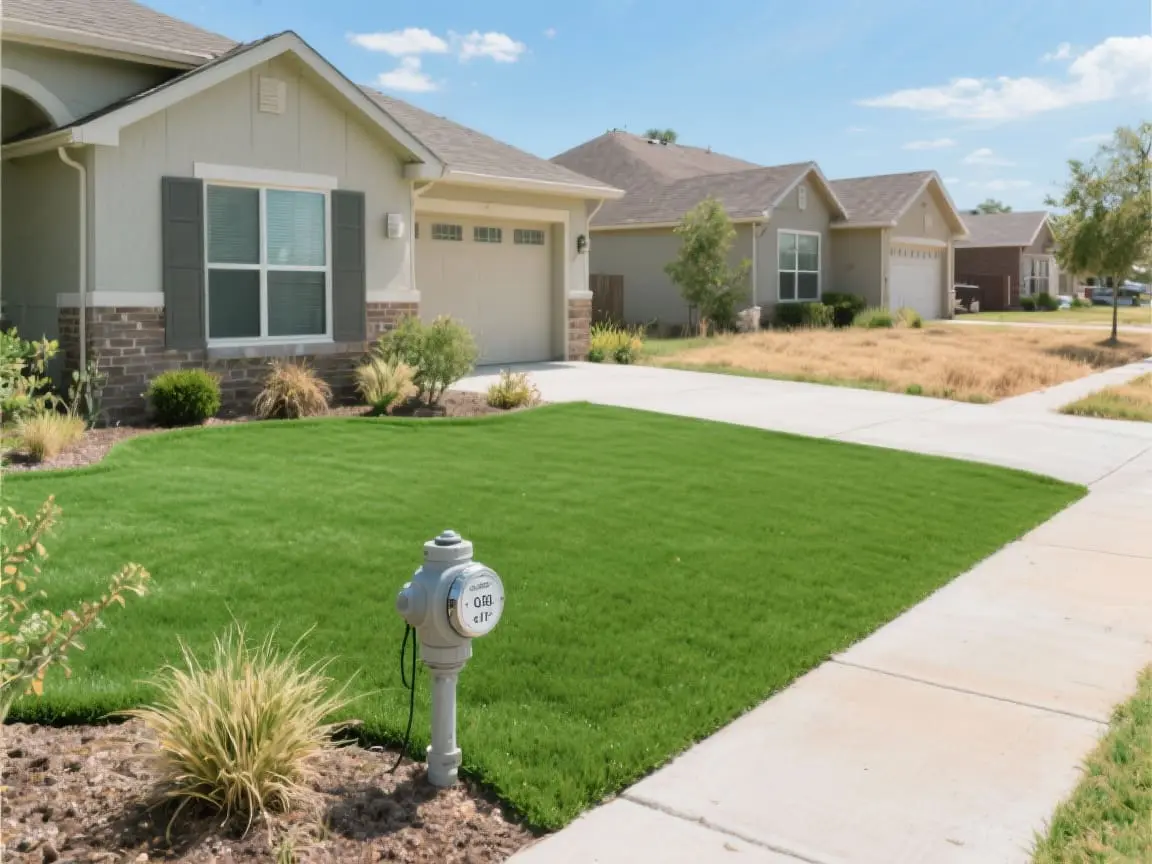
How Much Money Can You Really Save on Your DFW Water Bill with Artificial Turf?
You can save up to 70% on your total water bill by switching to artificial turf, which translates to thousands of dollars in annual savings for the average DFW homeowner. This significant cost reduction is achieved by completely eliminating the need for sprinklers and irrigation to maintain your lawn.
In this guide, we break down exactly how DFW homeowners can calculate their return on investment and see why synthetic turf is one of the smartest financial upgrades you can make to your property.
Why Water Savings Matter for Texas Lawns
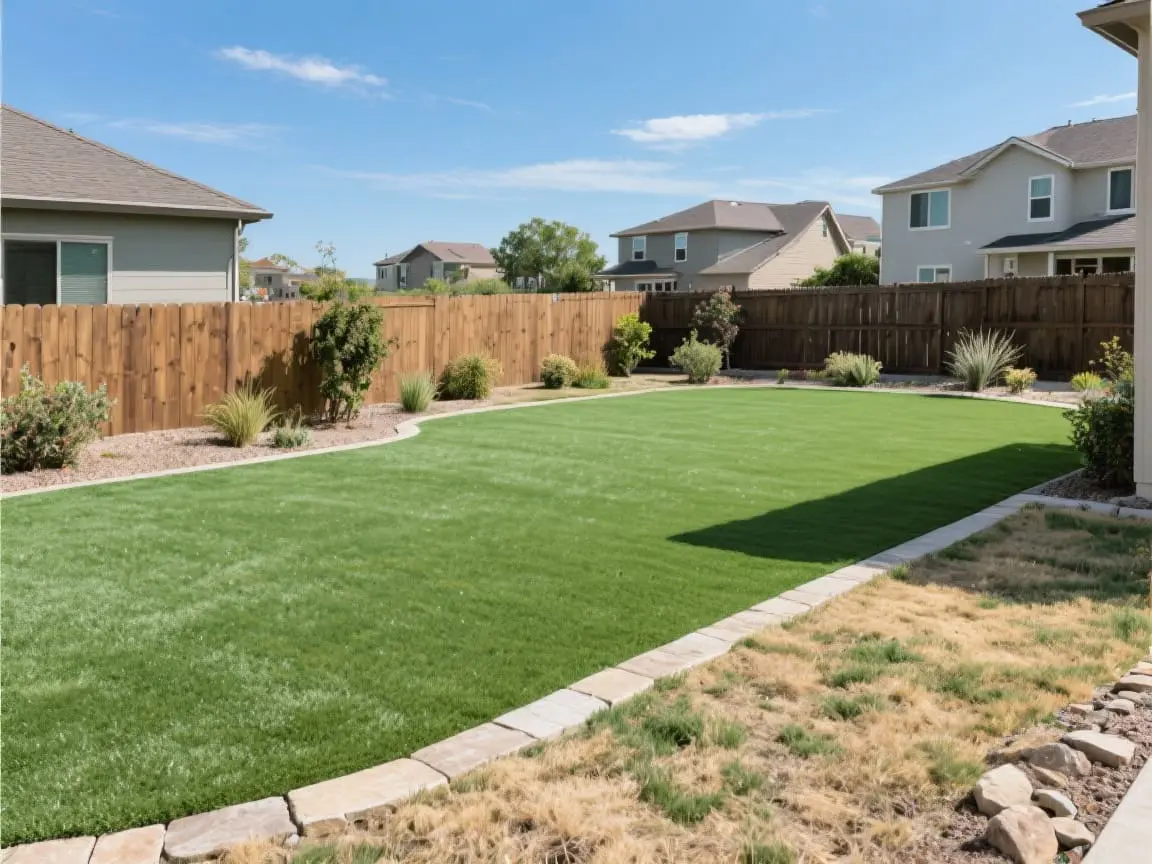
In North Texas, your water bill is a battle fought on two fronts: blistering summer heat and restrictive city ordinances. The relentless 100°+ days demand constant watering just to keep natural grass from turning brown and brittle. At the same time, cities across DFW frequently impose strict watering restrictions, forcing you to choose between a dead lawn or a hefty fine. This constant struggle makes maintaining a green yard an expensive, frustrating liability. This is why our Pricing & Financing options are designed to show you how quickly a turf installation pays for itself through utility savings alone.
How to Calculate Your Potential Water Bill Savings
Seeing the return on investment (ROI) is simple when you do the math. Here’s a straightforward way to estimate your savings.
Step 1: Find Your Lawn’s Square Footage
Measure the length and width of your main lawn areas and multiply them to get the total square footage. For an average Dallas-Fort Worth suburban home, let’s use 1,000 square feet as an example.
Step 2: Determine Water Usage for Natural Grass
To keep 1,000 square feet of St. Augustine or Bermuda grass healthy in Texas, it needs about 0.62 gallons of water per square foot, per watering session. Most experts recommend watering 2-3 times a week during the peak summer months.
Calculation: 1,000 sq ft x 0.62 gallons = 620 gallons per watering session.
Weekly Usage: 620 gallons x 2.5 times per week = 1,550 gallons per week.
Monthly Usage: 1,550 gallons x 4 weeks = 6,200 gallons per month.
Step 3: Calculate the Cost
Water rates vary, but a common rate in DFW is around $10 per 1,000 gallons for higher-tier usage (which lawn watering always falls into).
Monthly Cost: 6.2 (thousand gallons) x $10 = $62 per month on watering your lawn. Over a typical 8-month watering season in Texas, that’s nearly $500 spent just on grass.
The Artificial Turf Advantage: The “Zero” Factor
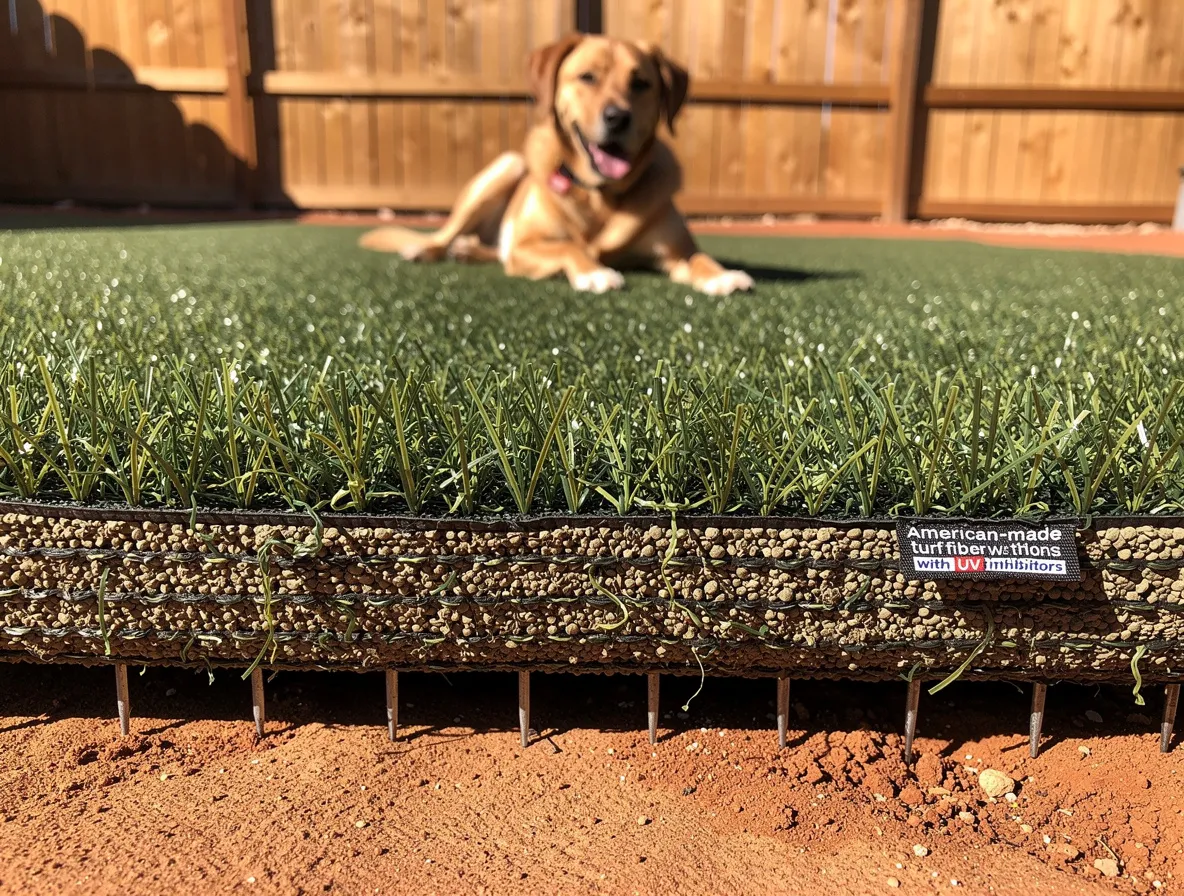
With an All American Turf installation, that cost becomes $0. You completely eliminate that portion of your utility bill, and the savings go directly back into your pocket, year after year.
Dealing with Water Bills in the DFW Climate
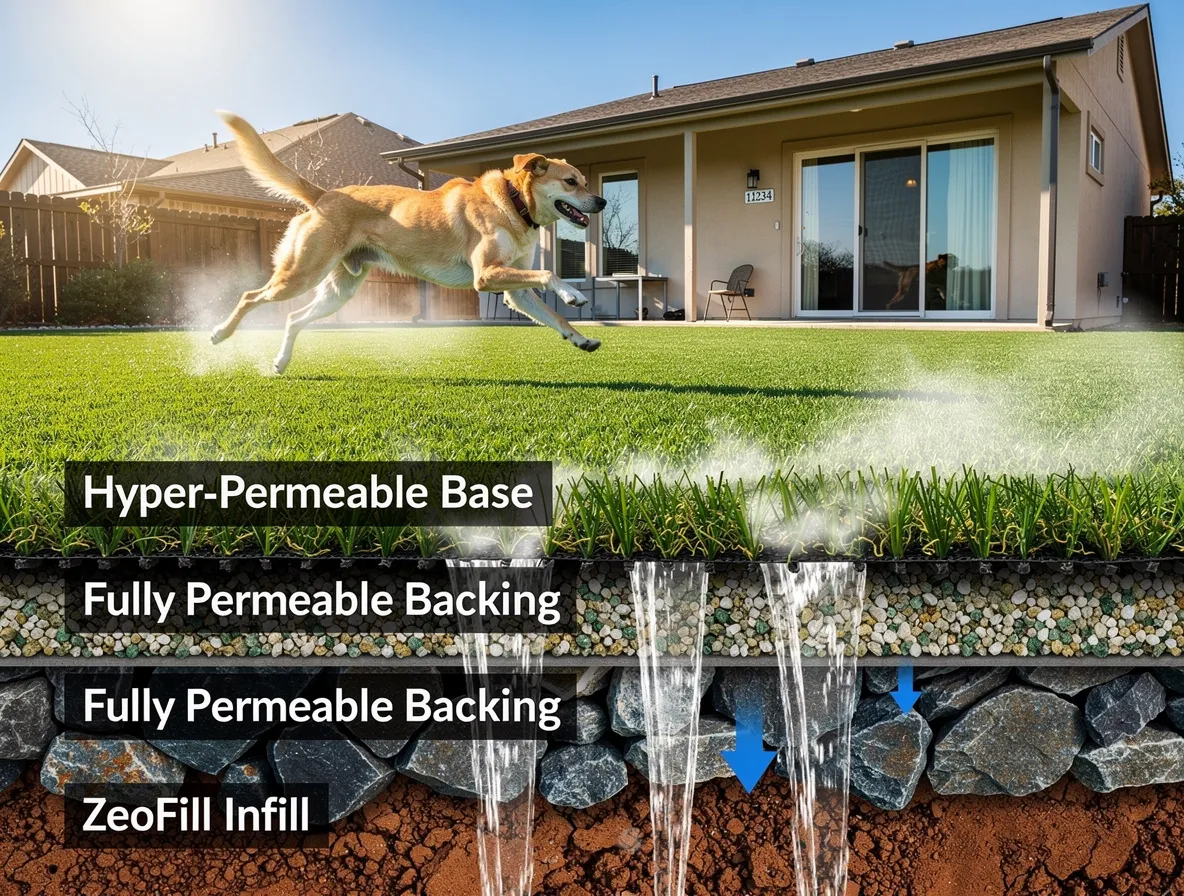
This isn’t just about saving money; it’s about smart water conservation in a region that desperately needs it. Our infamous “gumbo” clay soil doesn’t absorb water efficiently. Much of the water you spray from your sprinklers either evaporates in the intense heat or runs off into the street before it can reach the grassroots. Artificial turf solves this problem entirely. Our engineered drainage systems handle heavy DFW downpours effectively, preventing mud and runoff, while requiring zero water from you on a daily basis.
The Bottom Line: A Smarter Investment
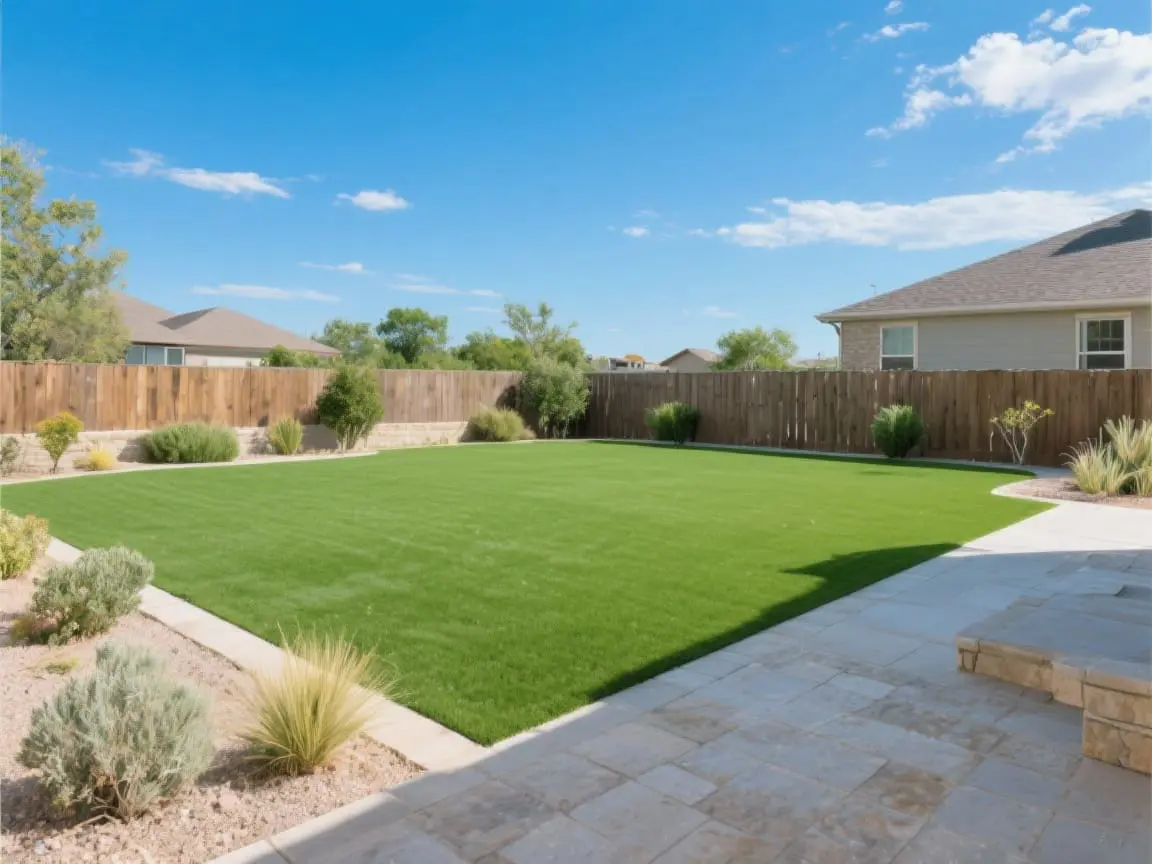
Your lawn shouldn’t be a constant drain on your wallet and a source of environmental waste. By eliminating irrigation costs, you can see a return on your artificial turf investment in just a few years. After that, the savings are pure profit.
Ready to stop watering your lawn and start saving money? Let the pros show you how.