How Do You Prepare Artificial Turf for a Texas Winter?
The best way to prepare your artificial turf for a DFW winter is by clearing all leaves and debris, giving the surface a final rinse, and cross-brushing the fibers to keep them upright. This simple maintenance ensures your lawn is ready for Texas’s unpredictable freezes and thaws. In this guide, we break down exactly how DFW homeowners can protect their turf investment all winter long.
Why Winter Turf Care Matters for Texas Lawns
Unlike northern states with heavy snowpack, DFW winters are a mix of mild days, sudden hard freezes, and the occasional ice storm. This freeze-thaw cycle can be tough on any landscape. While natural grass turns brown and dormant, your artificial turf is designed to stay green and beautiful. A little prep work prevents debris from matting down fibers and ensures your drainage system is clear before winter rains. This is why many homeowners switch to our durable Residential Lawn systems that are built to handle Texas weather extremes.
A Step-by-Step Guide to Winterizing Your Turf
Step 1: Clear All Debris
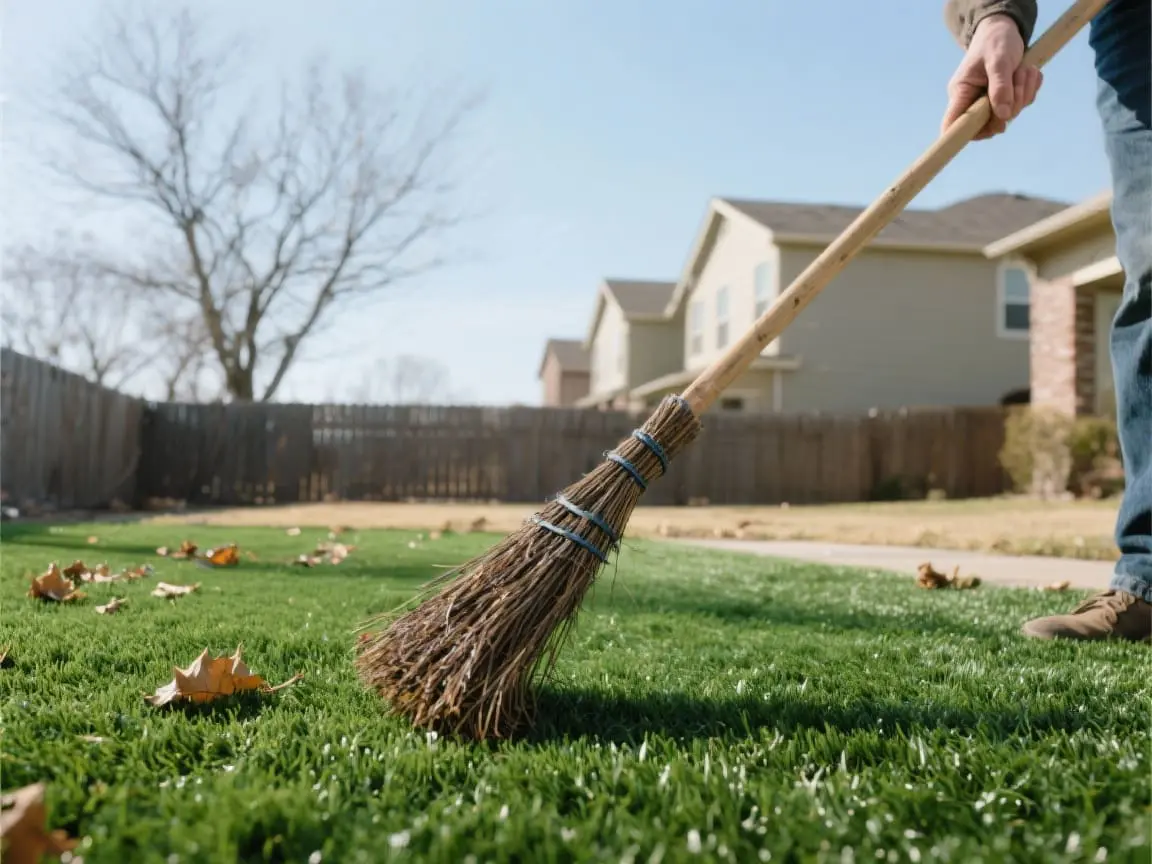
Before the first major freeze, use a leaf blower or a stiff-bristled broom (never metal) to remove fallen leaves, twigs, and acorns. Decomposing organic matter can hinder drainage and become a bigger hassle to clean up in the spring.
Step 2: Give it a Final Rinse
Hose down the entire surface to wash away any lingering dust, pollen, or pet residue. This is especially important in pet areas. A clean surface prevents any unwanted material from getting trapped if an ice storm hits.
Step 3: Cross-Brush the Fibers
Using a turf rake or power broom, brush the grass fibers against their natural grain. This “fluffs” them up and ensures they don’t get matted down over the winter, keeping your lawn looking full and upright come springtime.
Dealing with Winter Weather in the DFW Climate
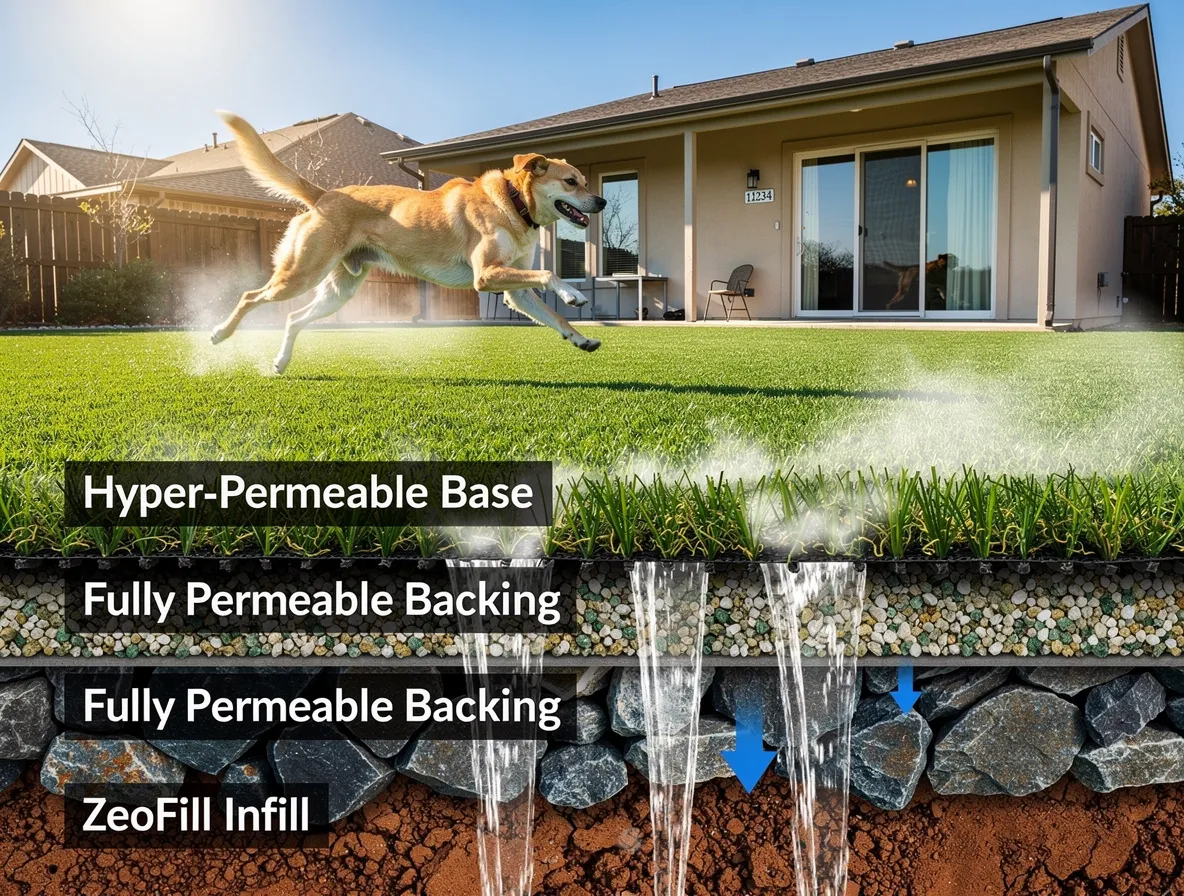
The biggest question we get is about ice and the rare Texas snow. In our 100°+ summers, heat is the main concern, but DFW’s winter presents unique challenges. Here’s the good news: our turf is built for it. The rapid drainage systems we install for heavy spring storms also allow melting ice and snow to drain away quickly, preventing a muddy, frozen mess. If you get a light dusting of snow, it’s best to let it melt naturally. For a heavier ice accumulation, avoid using rock salt, as it can clog the drainage holes. Simply let the Texas sun do its job—it usually doesn’t take long.
The Bottom Line
Winterizing your artificial turf in North Texas is remarkably simple. A quick clean-up and brushing session is all it takes to ensure your lawn remains the envy of the neighborhood, even on the coldest days. It’s just one more reason synthetic grass is a smart, low-maintenance investment for DFW homeowners.
Don’t want to deal with seasonal maintenance? Let the pros handle it.