
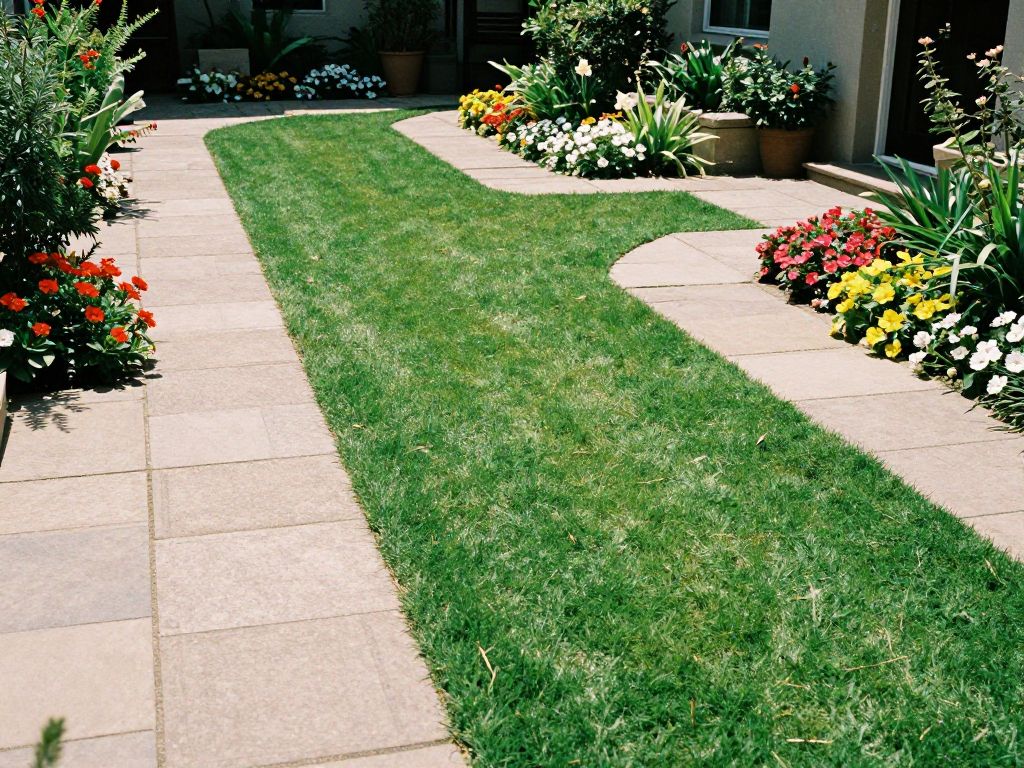
What You Need to Know About Turf Around Patio Pavers (Before You Install Anything)
If you’re wondering whether turf around patio pavers is a good idea—for your pool deck, outdoor living area, or backyard paths—the short answer is: yes, when it’s done thoughtfully.
Using turf between or around pavers can:
- Soften hardscapes so they feel more like a resort than a driveway
- Keep your pool area cooler underfoot than bare stone or concrete
- Cut down on mud, mess, and maintenance compared to natural grass
- Create a clean, modern look that still feels green and relaxed
From pool decks to pathways, integrating turf around patio pavers has become a go‑to design move for anyone wanting a polished, low‑maintenance outdoor space that still feels alive and inviting.
Below, we’ll walk through how it works, where it shines (especially around pools), and what to know before you commit—so you can plan a space that looks amazing and actually works in everyday life.
Why Turf Around Patio Pavers Is So Popular Right Now
Turf around pavers isn’t just a trend—it’s a response to how we actually use outdoor spaces today.
People want:
- Resort-style spaces at home (especially around pools)
- Less yard work, more time enjoying the space
- Clean lines and consistent color that last longer than real grass
Artificial turf between pavers helps solve all of that at once:
- It visually warms up stone, concrete, and tile
- It cuts down on mud, weeds, and bare patches
- It stays green and “finished” all year, even in high-traffic zones
So if your main question is, “Is turf around my patio pavers worth it?”—for most pool and outdoor living areas, yes. Particularly if you want a modern, low‑maintenance look that still feels soft and inviting underfoot.
Best Places to Use Turf Around Pavers
1. Around Pool Decks and Coping
Turf around patio pavers is especially effective around pools because it:
- Keeps your pool area cooler than plain concrete or stone
- Reduces mud and dirt washing into the pool
- Provides a softer surface for kids and bare feet
- Visually connects your pool deck with the rest of the yard
You can integrate artificial turf seamlessly around pool pavers to define lounge areas, walkways, and transitions. For more inspiration on how this works in real-world layouts, explore additional ways to integrate turf in your poolscape on the pool landscaping ideas page.
2. Patio Edges and Walkways
Using turf around patio pavers along edges and paths can:
- Soften the border between patio and planting beds
- Make stepping-stone paths more comfortable and usable
- Create a “ribbon” of green that pulls the eye through the space
This is especially effective with:
- Rectangular concrete pavers
- Large-format porcelain tiles
- Stepping stones set in gravel or decomposed granite
3. Outdoor Living Zones
Around outdoor kitchens, lounge areas, and fire pits, turf around pavers can:
- Create a more indoor-outdoor feel
- Break up large paved spaces so they feel less stark
- Define separate “rooms” without building walls
Think:
- Turf “rugs” outlined by paver borders
- Grid patterns where turf alternates with stone or concrete
- Seating areas framed in turf for a softer, more relaxed vibe
Design Ideas: How to Use Turf Around Pavers Creatively
Clean Grids and Modern Lines
If you love a modern aesthetic, turf around patio pavers can help you create:
- Grid patterns with evenly spaced concrete or porcelain pavers
- Checkerboard layouts alternating between turf and stone
- Linear strips of turf breaking up wide paved areas
These patterns work well for:
- Contemporary pool decks
- Minimalist patios
- Rooftop terraces and small yards
Casual, Natural-Looking Paths
For a more organic feel, use turf around irregular or natural stone pavers:
- Space stones with wider joints filled with turf
- Mix curved walkways with soft turf borders
- Blend turf with ornamental grasses and low plantings nearby
This approach works especially well in:
- Family backyards
- Cottage-style gardens
- Transition zones between pool and planting areas
Framing Features and Focal Points
Turf between or around pavers can subtly highlight:
- Fire pits
- Water features
- Outdoor dining areas
- Lounge areas near the pool
By placing a “halo” or border of turf around a paved zone, you create:
- A soft visual boundary
- A more comfortable sitting or walking area
- A focal point that feels intentional and finished
Key Considerations Before Installing Turf Around Pavers
Before committing, it helps to think through how turf around patio pavers will perform over time—especially around pools.
1. Drainage (Especially Near Pools)
Good drainage is critical. Around pools and patios, look for:
- A proper base: compacted rock and sand that allows water to flow
- Weep holes or drainage channels if you’re on a hard slab
- Slight slope away from the pool to prevent standing water
Well-installed turf around pavers should:
- Let splash water drain through quickly
- Avoid puddling or soggy spots
- Keep edges from lifting or shifting
2. Heat and Comfort
Stone and tile can get extremely hot in full sun. Turf around patio pavers can help, but keep these points in mind:
- Some turf types stay cooler than dark pavers
- Lighter pavers + turf = a more comfortable surface
- Shade from umbrellas, pergolas, or trees can make a big difference
Near pools, many people like turf because:
- It’s more forgiving on bare feet
- It can create “cool zones” between hotter paved areas
3. Safety and Slip Resistance
Around pools, safety is top of mind. Properly chosen and installed turf around pavers can:
- Provide better traction than wet tile or smooth concrete
- Create easier transitions between deck, turf, and pool entry points
- Reduce the risk of muddy or slick grass right at the pool edge
Look for turf and base systems designed for:
- High traffic
- Fast drainage
- Multi-directional grip underfoot
4. Maintenance Expectations
Artificial turf isn’t “no maintenance,” but it is low maintenance compared to natural grass between pavers.
With turf between your pavers, you typically avoid:
- Constant trimming around each stone
- Bare spots from foot traffic
- Mud and weeds taking over the joints
You may still need to:
- Rinse off dust, debris, or pet mess
- Brush the fibers occasionally to keep them standing upright
- Check edges or seams in high-traffic areas over time
Natural Grass vs. Artificial Turf Around Pavers
Many people start by imagining real grass between stones, then realize turf might fit their lifestyle better.
| Factor | Natural Grass Between Pavers | Artificial Turf Around Pavers |
|---|---|---|
| Appearance Over Time | Can thin, yellow, or develop bare spots | Consistent color and coverage year-round |
| Maintenance | Requires mowing, trimming, fertilizing, weed control | Occasional rinsing and brushing; no mowing |
| Durability | Wears down in high-traffic areas | Designed for foot traffic; more resilient |
| Pool Compatibility | Can get muddy, send clippings and dirt into pool | Reduces debris, mud, and loose soil near the pool |
| Water Use | Needs regular watering (in most climates) | No irrigation needed (beyond cleaning) |
If your priority is easy, reliable, clean edges around your pavers, turf tends to be the more practical option—especially for pools and high-use patios.
How Turf Around Pavers Works (Step by Step Overview)
Every project is different, but most turf around patio pavers follows a similar process.
1. Planning the Layout
- Decide where you want solid paving vs. turf inlays
- Choose paver sizes and spacing that fit your style (tight joints vs. wide turf strips)
- Consider traffic patterns—where people will actually walk, play, and lounge
2. Preparing the Base
Typical steps include:
- Removing existing grass/soil in the area
- Installing a compacted base material (like crushed rock)
- Adding a layer of sand or similar material to help with leveling
- Ensuring proper slope and drainage away from the pool or structures
3. Setting the Pavers
- Level and secure pavers with consistent spacing
- Leave appropriate gaps where turf will sit or run between stones
- Check that transitions (like step-downs or edges) are smooth and safe
4. Installing the Turf
- Cut turf to fit between, around, or adjacent to the pavers
- Secure it so edges don’t curl or lift over time
- Infill (if used) is added and brushed in to support the fibers
The key is precision: snug fits around each paver, consistent lines, and a base designed for drainage and stability.
How Turf Around Pavers Enhances Pool & Outdoor Spaces
Turf around patio pavers is particularly impactful when it’s part of a bigger vision for your outdoor living area.
1. Cooler, More Comfortable Pool Surrounds
When used strategically, turf around pavers can:
- Create cool zones for loungers and play areas
- Break up large hot surfaces with softer, more forgiving material
- Offer barefoot-friendly paths from house to pool and back
2. Cleaner Pools and Easier Upkeep
With turf versus natural grass around your pavers:
- Less soil and lawn debris ends up in the pool
- Rain and irrigation aren’t turning walkways into mud
- High-use areas stay tidy even during parties and heavy foot traffic
3. A More “Finished” Backyard Design
Visually, turf around patio pavers:
- Connects the pool, patio, and other living areas
- Frames features like fire pits, outdoor kitchens, and lounge zones
- Helps your space look intentional and cohesive instead of patchwork
If you’re exploring a full refresh around your pool, including ideas for decking, plantings, and turf placements, you can dig deeper into overall layout concepts on the pool landscaping ideas page.
Planning Your Own Turf-and-Paver Project
When you think about turf around patio pavers in your own space, start with a few simple questions:
-
Where do I need softness?
- By the pool? Under lounge chairs? Along play areas?
-
Where do I need durability?
- High-traffic paths from house to pool, outdoor kitchen zones.
-
Where do I want visual contrast?
- Large slabs of concrete or stone that feel too stark or hot.
-
What style am I going for?
- Clean, modern grids? Casual stepping stones? Resort-inspired pool deck?
Use your answers to map:
- Paver-only areas (for dining, heavy furniture, or driveways)
- Turf-only zones (play areas, relaxation spots)
- Combined turf-and-paver designs (paths, transitions, pool edges)
FAQ: Turf Around Patio Pavers
| Question | Answer |
|---|---|
| Is turf around patio pavers safe near pools? | Yes, when installed with proper drainage and suitable turf, it can improve traction, reduce mud, and help keep debris out of the pool. Make sure the base drains well and transitions to the pool coping are smooth. |
| Will turf around pavers get too hot? | It can get warm in full sun, but often stays more comfortable than dark stone or concrete. Lighter paver colors, shade elements, and turf designed for lower heat retention can all help. |
| How do you keep turf between pavers clean? | Typically: quick rinses with a hose, occasional brushing to keep fibers upright, and spot cleaning if needed (for spills or pet mess). It’s significantly less work than mowing and trimming natural grass joints. |
| Can turf be installed over existing concrete or a pool deck? | Often, yes—with the right preparation. A proper drainage plan and cushioning layer may be added over solid surfaces, then turf and paver inlays are designed on top. Each site should be evaluated individually. |
| What if I already have pavers—can turf be added later? | In many cases, yes. Gaps can be created or widened between pavers, and turf can be cut to fit between or around them. The feasibility depends on your current base, spacing, and drainage. |
| Does turf around patio pavers work in rainy climates? | It can, as long as the base is built for drainage and the turf backing allows water to pass through quickly. Proper grading and edge details are especially important in wet regions. |
| Is natural grass ever better than turf between pavers? | If you prefer a fully natural landscape, don’t mind trimming and upkeep, and have good growing conditions, natural grass can work. But for high-traffic, poolside, or low-maintenance spaces, turf is usually more practical. |
| How do I choose the right turf for around pavers? | Focus on: durability (for foot traffic), drainage (for rain and pool splash), heat performance, and how the color/texture looks next to your pavers and pool surfaces. |
Using turf around patio pavers is ultimately about balance: blending hard, durable materials with soft, green surfaces so your outdoor space feels functional, cohesive, and inviting—whether you’re stepping out for a quiet morning by the pool or hosting a packed summer gathering.
Explore Related Turf Resources
Related Turf Guides
- Accessible Drainage Solutions for Turf: The Key to Truly Senior-Friendly Outdoor Spaces
If you’re exploring senior-friendly turf, accessible drainage solutions for turf are just as important as the turf itself.
- Aesthetic Comparison: Turf vs. Grass (and What Actually Looks Better Long-Term)
If you’re weighing turf pros and cons, the **aesthetic differences between turf and grass** are probably at the top of your list.
- Annual Turf Care Calendar: Your Simple, Seasonal Guide to a Healthier Lawn
If you’re wondering, “What should I be doing for my lawn right now?” the answer lives inside an **annual turf care calendar**.
- Are luxury artificial turf options worth the investment for DFW homeowners?
Yes, upgrading to luxury artificial grass offers unmatched aesthetics, superior durability, and a premium feel that significantly elevates your home’s outdoor living experience and long-term value.
- Are you tired of staring at a dull, high-maintenance patch of grass?
**Yes, you can absolutely transform your yard into a stunning, functional space with a backyard landscaping makeover, and synthetic turf is often the key ingredient for DFW homeowners.**